
Last updated November 15, 2026
 Wrought iron
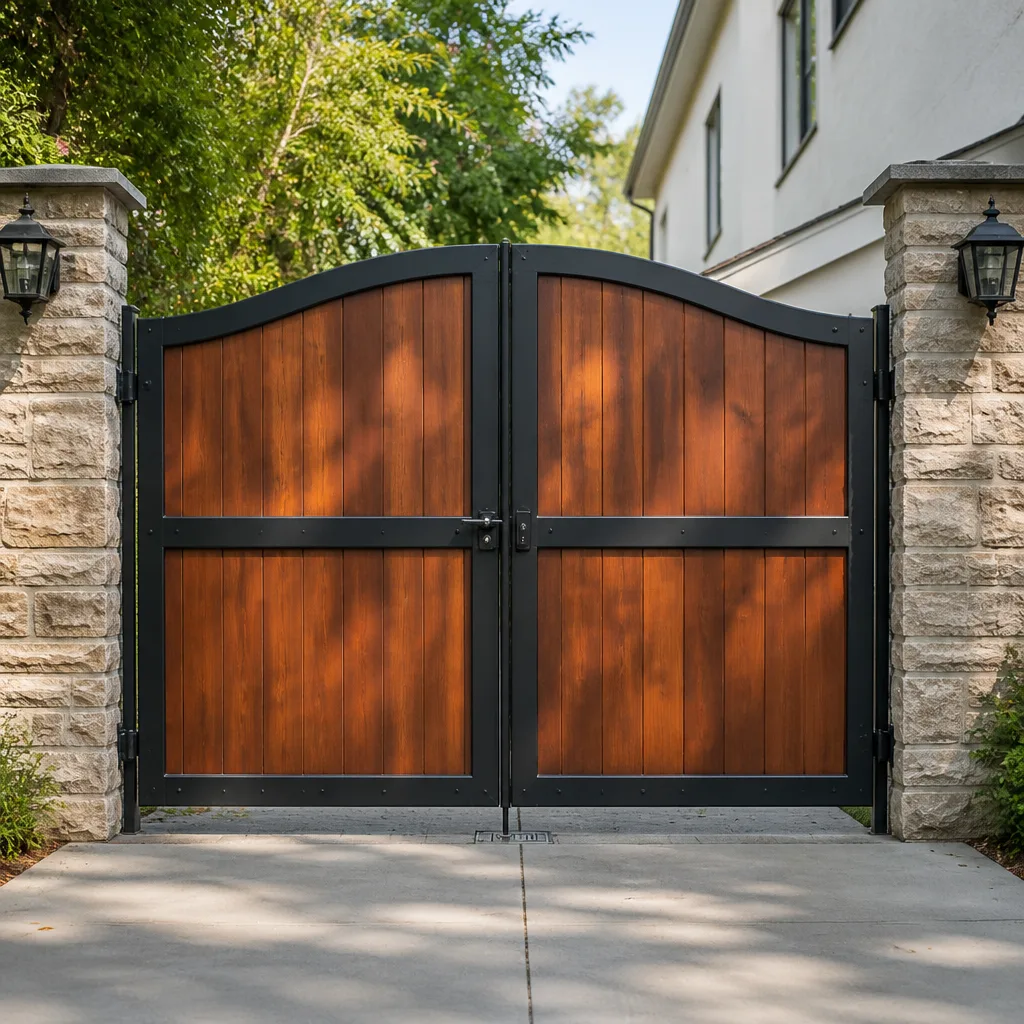 Wood & steel frame
 Farm & ranch
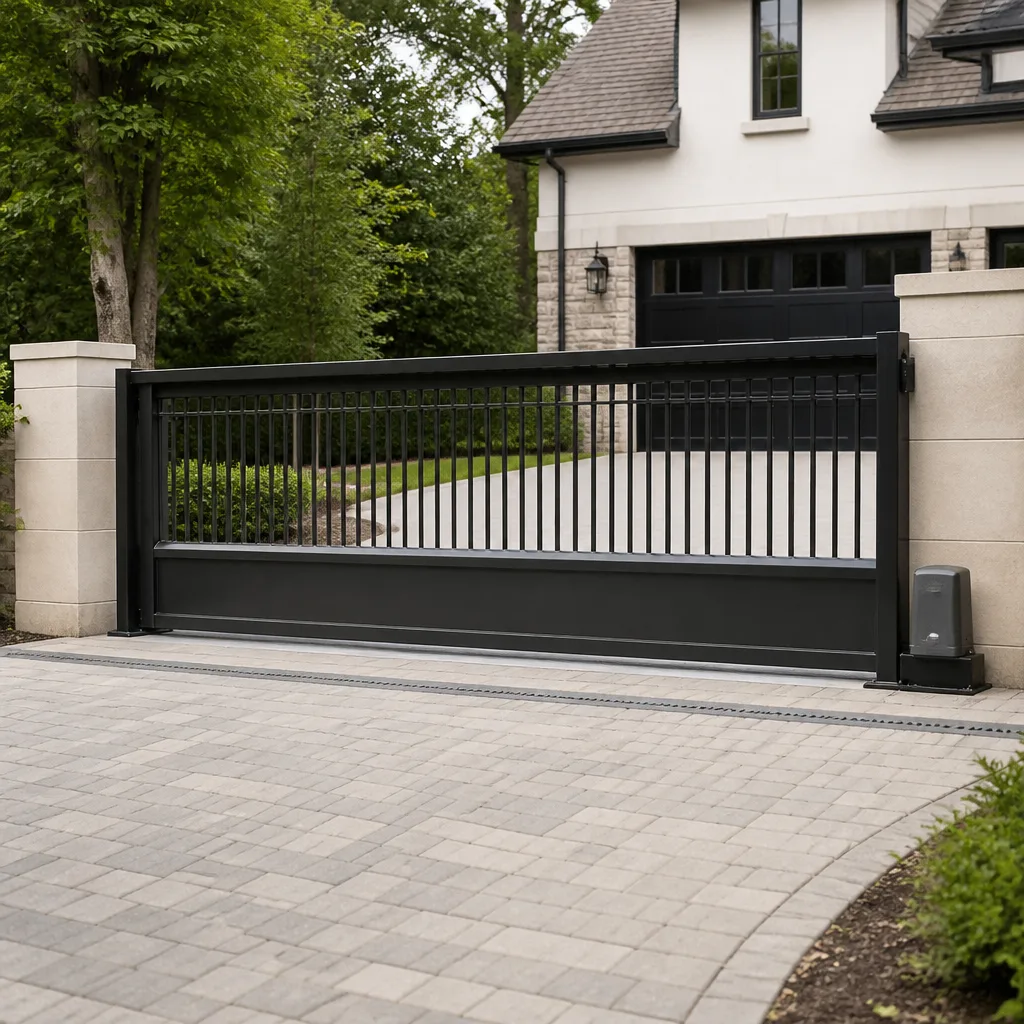 Sliding driveway gates
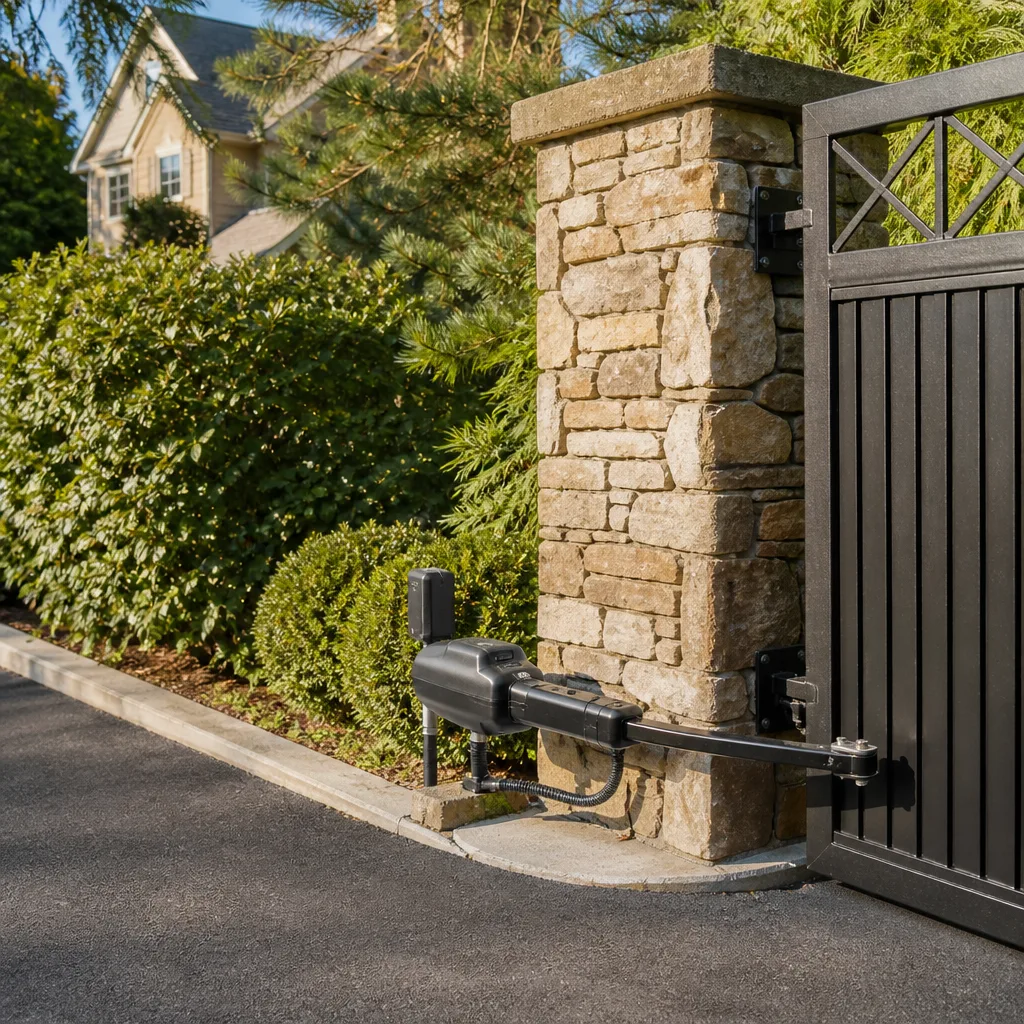 LiftMaster operators
Free on-site gate assessment - hinges, posts, and your LiftMaster or Nice gate operator checked before anything is quoted
The assessment is free and the quote is the invoice.
Get your free estimateSeasonal Gate Repair Care for Knoxville: Year-Round Homeowner’s Guide
Most gate care advice treats the year as one long stretch of weather with a generic checklist tacked on. That misses what actually happens here. Knoxville doesn’t hand your gate a single threat – it runs it through four distinct stress cycles, and each one attacks a different part of the system. A full hard winter would be easier on gate posts and hinges than the repeated transitions we get between cold nights and mild afternoons, because it’s the back-and-forth that works metal fatigue. This guide breaks down what each East Tennessee season actually does to your gate hardware, how to spot the damage before it shows up, and where the risks really live in Knoxville.
Quick Answer
Seasonal gate care in Knoxville means matching your checks to four distinct stress cycles: spring freeze-heave and hinge inspection, summer humidity and control board corrosion, fall debris and photo eye drift, and winter battery and cold-start testing. The single most-skipped task is a grease viscosity check, because Knoxville’s temperature swings push lubricant out of its working range faster than a stable climate would. Doing the right check in the right season prevents next season’s breakdown instead of reacting to it.
Styles & brands we work with
- Wrought iron
- Wood & steel frame
- Farm & ranch
- Sliding driveway gates
- LiftMaster operators
Table of Contents
- Spring: Post-Winter Hinge Inspection and Freeze-Heave Movement
- Summer: Humidity, Control Boards, and Solar Operator Performance
- Fall: Debris in Tracks and Photo Eye Drift
- Winter: Battery Backup Testing Before Ice Season
- The Grease Viscosity Check Nobody Talks About
- Swing Gates vs. Slide Gates: Where Each One Fails
- What to Check on Your Specific Operator Brand
- Common Mistakes to Avoid
- When to Call a Professional
Spring: Post-Winter Hinge Inspection and Freeze-Heave Movement
Spring is when the ground tells the truth about your gate posts. While the freeze-thaw cycle runs through winter, moisture in the soil around a post expands as it freezes and settles as it thaws. Over a season that repeated movement can lift a post slightly, and a gate that was perfectly aligned in November can start dragging by March. This is the most common reason a gate suddenly won’t latch or binds halfway through its swing in Knoxville – the mechanism is fine, the footing has shifted.
A proper post-winter inspection is about watching how the gate moves, not just how it looks. Check these in order:
- Look for a visible gap at the base. Soil pulling away from a post, or a post that sits proud of the surrounding grade, points to heave. A post that was set to proper footing depth resists this far better than one that was undersized at installation.
- Open the gate by hand and feel for binding. If it drags at one point in the swing and frees up at another, the alignment has changed and either the hinges or the post are the reason.
- Check the hinges for play. Grab the gate near the hinge and rock it. Movement that wasn’t there before means worn hinge hardware or a loose anchor. Hinges take the full load of a heavy swing panel, and after a freeze-thaw season they show it first.
- Confirm the post is still plumb. A slight lean at the top of the post compounds over the length of the gate. By the time it’s obvious to the eye, the operator is already working harder than it should.
- Test the latch and the stop points. If the gate no longer meets the latch cleanly, alignment is off and continued operation will wear the operator.
One thing to be clear on: hinge and post correction on a loaded gate is not a job to muscle through yourself. A heavy panel coming off its hinge is a genuine crush and injury risk. If you find movement, get a trained technician to look before you keep cycling the gate. If you’re in Knoxville and notice a settled post or a hinge that’s working loose, our gate repair work starts with exactly this kind of alignment check.
Summer: Humidity, Control Boards, and Solar Operator Performance
Knoxville summers are humid, and humidity is a control board problem, not a comfort problem. Warm, moisture-heavy air finds its way into operator housings and enclosures, and over months it deposits condensation on circuit boards and terminal connections. That’s where corrosion starts – not on the parts you can see, but on the low-voltage side of the board where the logic lives. A control board that’s quietly corroding tends to fail all at once rather than degrade gracefully, and summer is when we see the most of it.
Here’s what to watch for and check during peak heat and humidity:
- Look inside the operator housing for chalky white or green deposits at the terminals. That film is corrosion, and it’s the earliest warning sign a board gives.
- Check the enclosure seal and any gasket. A compromised seal lets humid air and insects in, and bugs nesting on a board are a surprisingly common summer failure.
- Watch for intermittent or odd behavior. A gate that occasionally reverses for no reason, hesitates, or ignores a remote command can be a corroded board, not a remote problem.
- Test the loop detector if you have one. Moisture in the wiring or the loop can cause false detections, which shows up as a gate that opens on its own or refuses to close.
Solar-powered operators deserve their own summer attention. Peak UV and long daylight hours sound helpful, but heat is the enemy of both the panel’s efficiency and the battery’s lifespan. A solar operator that ran fine in spring can start straining in the hottest weeks as the battery holds less charge and the motor works against higher internal temperatures. If your system is solar, check that the panel is clear of summer growth and that the battery is holding a full charge, not just barely enough to limp through a cycle.
The operators we handle most across residential driveways – systems by Ghost Controls and Linear – are reliable workhorses, but every board of every brand is exposed to the same Knoxville humidity. A board that’s diagnosed early is often repairable; one that’s left to corrode into the traces usually means replacement. If a board or operator has stopped responding and you’re weighing repair against replacement, our electric gate repair covers operators, control boards, and loop detectors directly rather than farming them out.
Fall: Debris in Tracks and Photo Eye Drift
October is the month your safety sensors start lying to you. Photo eye drift – a slight misalignment or fouling that pushes the sensor out of its reliable range – happens more in fall than at any other time of year. The cause is simple: falling leaves, twigs, and the fine grit that comes with them collect on the sensor lenses and their brackets. The gate doesn’t fail outright; it starts behaving unpredictably, reversing or refusing to close for no apparent reason.
The consequence matters more than the cause. A gate that won’t close because a safety sensor is dirty or nudged out of alignment is a gate stuck open, and a gate stuck open is a security gap. That’s the real cost of a leaf in the wrong place.
Fall is also when slide gates show their track problems. A slide gate rides on a track, and that track becomes a catch-all for leaves, seed pods, and grit through the season. Debris in a track causes the gate to ride up, bind, or jerk, and a binding slide gate is one that can come off the track – a heavy panel leaving its track is a serious safety event, not a nuisance.
Here’s the fall routine that keeps both problems ahead of you:
- Clear the track before every cold snap. Sweep or blow debris out of a slide gate’s track rather than waiting for it to build. A clean track is a gate that won’t bind.
- Wipe the photo eye lenses. Clean the sensor faces and check that each bracket is still secure and pointing straight at its partner.
- Test the safety reverse. Put an object in the path and confirm the gate reverses or stops. If it doesn’t, the sensors need attention before winter.
- Clear the swing path. Wet leaves packed at the gate’s stop points can foul the latch and hide alignment problems.
- Check for debris in the operator housing. Fall brings insects looking for warmth, and an operator full of them is an operator that will fail.
Beyond the gate itself, fall in Knoxville is the right time to look at the wiring run – the cable between your operator and its sensors or controls. Rodent damage and insulation cracks show up as intermittent faults, and catching them before winter is far cheaper than a dead system in January.
Winter: Battery Backup Testing Before Ice Season
A gate operator that fails at 28°F while the mechanism looks perfectly fine is usually a battery problem, not a motor problem. Cold reduces a battery’s ability to deliver current, and an older battery that holds a charge in summer may not have the output to start the operator or complete a cycle on the coldest mornings. The gate mechanism feels solid because it is solid – the fault is that the backup power isn’t there when the temperature drops.
Test your battery backup before ice season, not during it. A proper test looks like this:
- Disconnect line power (on a system designed for it) and run the gate on battery alone. Watch whether it completes a full open and close cycle at normal speed.
- Check the battery’s age. If it’s been through several summers, plan on replacing it before winter rather than gambling on another season.
- Inspect the terminals for corrosion and clean or tighten as needed. A loose terminal mimics a dead battery.
- Confirm the operator’s charging circuit is working. If the battery never reaches full charge, the backup is only as good as the charger behind it.
- Test the manual release. If the operator dies in an ice storm, you’ll need to open the gate by hand – know how before you need to.
Winter is also when ice on the gate itself becomes a mechanical problem. Ice on a slide gate’s track binds it; ice on a swing gate’s hinges and latch adds load the operator can’t safely drive. Sweep ice and snow from the track and the gate’s travel path, and don’t force a frozen gate to operate – let a technician assess any operator that’s struggling. A gate operator that’s working against ice is an operator that’s heading for a failure.
The Grease Viscosity Check Nobody Talks About
Here’s the maintenance task most gate guides skip and Knoxville’s temperature range makes essential: checking grease viscosity. Grease isn’t a single thing – it’s formulated to stay in a working range of temperatures. In a stable climate, whatever grease went in at installation keeps doing its job. But Knoxville swings across a wide temperature band through the year, from cold winter mornings to hot summer afternoons, and that swing pushes lubricant out of its comfortable working range at both ends.
What does grease viscosity actually do to your gate? When grease gets too thick in the cold, it stops flowing to the wear points – the hinges, the operator’s moving parts, the track rollers – and the system runs dry and stiff until it warms up. When it gets too thin in the heat, it drains off the parts it was protecting. Either way, the result is accelerated wear that you won’t notice until a part fails.
Checking viscosity isn’t a DIY task. It means identifying what’s actually on the hardware and matching it to the temperatures the gate sees through the year. A general-purpose grease that’s fine in one season may be the wrong choice for the next. Get a technician to check what’s on the system and whether it holds up across the full Knoxville range – it’s the one item that ties all four seasons together.
Swing Gates vs. Slide Gates: Where Each One Fails
Swing and slide gates don’t share failure patterns, and treating them with one seasonal checklist misses where each is actually vulnerable. Here’s where the two differ most through the East Tennessee year:
- Swing gates carry their weight on hinges and a post, so freeze-heave and post movement hit them hardest in spring. Their winter risk is a frozen latch or hinge. Their operator drives a heavy panel through a swing arc, so any binding multiplies the load on the operator.
- Slide gates live or die by their track. Fall debris, winter ice, and summer grit all collect in the track, and a gate that rides up off its track is a panel that can leave the rail entirely – a genuine crush risk. Slide gates also use rollers and guides that wear more in a debris-heavy fall.
For both types, the operator’s electronics face the same summer humidity and winter cold, and both need their safety sensors tested seasonally. Knowing which parts are under stress in which season tells you what to look at – and when.
What to Check on Your Specific Operator Brand
Operator brands differ in what they’re most likely to need from season to season, and knowing your system’s brand points a technician straight at the right checks. We work on nine brands by name – LiftMaster, FAAC, BFT, Linear, Viking, Ghost Controls, DoorKing, Elite, and Mighty Mule – spanning residential openers through heavy commercial access systems.
A few worth calling out for seasonal care:
- BFT systems are common on both residential and commercial entries, and their control electronics reward a summer humidity check.
- Linear operators are frequent on residential driveways; check the board and battery through summer and winter respectively.
- Viking operators, often on heavier gates, put more load on hinges and posts, which makes the spring alignment check more important.
- Ghost Controls residential openers are a common solar-platform choice – that means battery and panel checks in both peak summer and cold winter.
Because we work across competing platforms rather than pushing one, the recommendation you get is driven by what your system actually needs, not by what a single brand rep happens to stock. If your gate is on a brand you don’t recognize, tell us what’s on the operator label and we’ll confirm whether it’s one we handle.
Common Mistakes to Avoid
- Treating seasonal care as one annual task. Knoxville’s four stress cycles each hit a different part, so a single spring checklist leaves the summer board, the fall sensors, and the winter battery untouched. Plan around each season.
- Forcing a frozen or binding gate to operate. Whether it’s ice in a slide track or a post that heaved, forcing the gate drives the operator against resistance it wasn’t built for. Stop and diagnose it.
- Cleaning the photo eyes but never testing the reverse. Wiping the lenses is only half the job; the safety reverse has to be tested to confirm it works.
- Skipping the battery test until the first cold morning. Test it in fall. A battery that holds in summer can fail at 28°F, and that’s the morning you find out.
- Greasing with whatever’s on the shelf. The wrong viscosity for Knoxville’s temperature range can do more harm than good. Match the grease to the climate.
- Ignoring a small post shift. A slight lean compounds over the length of a gate and wears the operator before it’s obvious. Early alignment checks save bigger repairs.
- Assuming a dead operator means replacement. In our experience many failures are corroded boards, loose terminals, or dead batteries – and a brand-agnostic technician can tell which. That’s why we Gate Repair Knoxville handles repair as a core service rather than a referral.
When to Call a Professional
Some checks are homeowner work: wiping sensor lenses, clearing a track, sweeping ice off a path. Others are not. Call a trained technician when a post has moved, when a hinge is working loose on a loaded swing gate, when a slide gate binds or rides up off its track, when a control board shows corrosion or odd behavior, or when an operator struggles in the cold. Any of these involves heavy panels, powered electronics, or the operator’s wiring and power – all genuine hazards to handle without training. Our technicians have up to 9 years of experience across residential and commercial systems. Gate Repair Knoxville offers free estimates in Knoxville – call (866) 361-6964.
See the difference
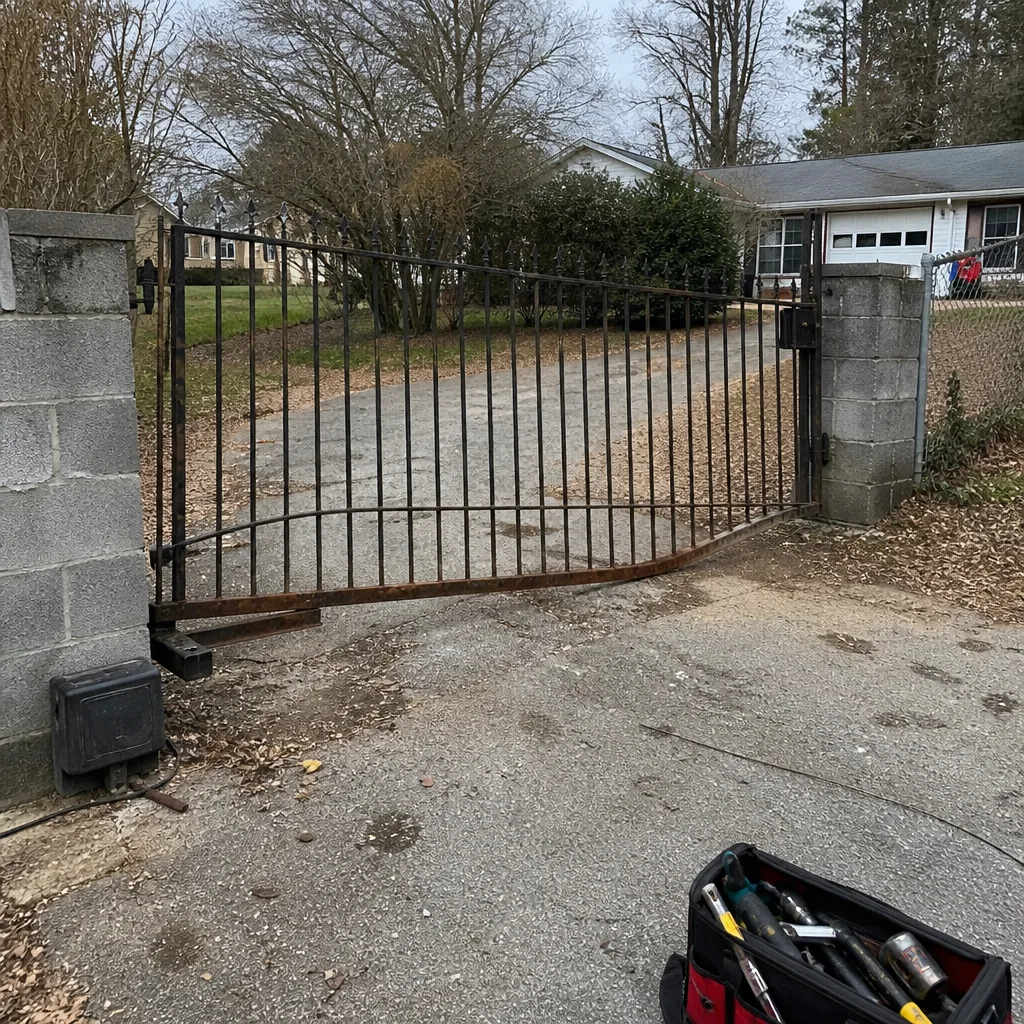 Before
 After
 Before
 After
 Before
 After
Frequently Asked Questions
Four times a year, once per season, because each season hits a different part of the system. A spring hinge and post check, a summer board and battery check, a fall debris and sensor check, and a winter battery and cold-start test keep ahead of the damage rather than reacting to it.
Cold reduces a battery’s ability to deliver current, so an older battery that works in summer can fail at 28°F even though the mechanism is sound. Test the backup before ice season and replace a battery that’s been through several years. If it still fails, call (866) 361-6964 for a free estimate.
Leaves, twigs, and fine grit collect on the sensor lenses and brackets and push the sensors out of alignment. The gate then behaves unpredictably – reversing or refusing to close. Clean the lenses and test the safety reverse, and call us if the fault returns.
We work on LiftMaster, FAAC, BFT, Linear, Viking, Ghost Controls, DoorKing, Elite, and Mighty Mule, spanning residential and commercial systems. If you’re not sure of your brand, tell us what’s on the operator label and we’ll confirm. Call (866) 361-6964 for a free estimate.
Yes. A binding slide gate can ride up and come off its track, and a heavy panel leaving the rail is a genuine crush risk. Stop using the gate and have a technician look at it before it moves again.
Yes. We handle full gate installation, gate repair, and electric gate repair – operators, control boards, sensors, and wiring – so you don’t need a separate installer and repair technician across the life of your system. We answer 24/7, with fast dispatch from 7am to 7pm, Sunday through Friday.
The Bottom Line
Knoxville’s climate isn’t one threat – it’s four stress cycles that each attack a different part of your gate. Freeze-thaw movement threatens posts and hinges in spring, humidity corrodes control boards in summer, debris and sensor drift cause security gaps in fall, and cold drains batteries in winter. Match your checks to each season, and don’t skip the grease viscosity check, because it’s the one task that ties them all together. Keep an eye on your brand’s specific weak points, know when a problem is beyond a homeowner fix, and you’ll spend your year preventing breakdowns instead of reacting to them.
Whatever your gate is doing – or not doing – we’re happy to take a look. Call (866) 361-6964 for a free estimate. We answer 24/7. Fast dispatch from 7am to 7pm, Sunday through Friday. Proud to serve Knoxville and the surrounding area, with installation and repair under one roof.
Written by the team at Gate Repair Knoxville.