
Last updated November 15, 2026
 Wrought iron
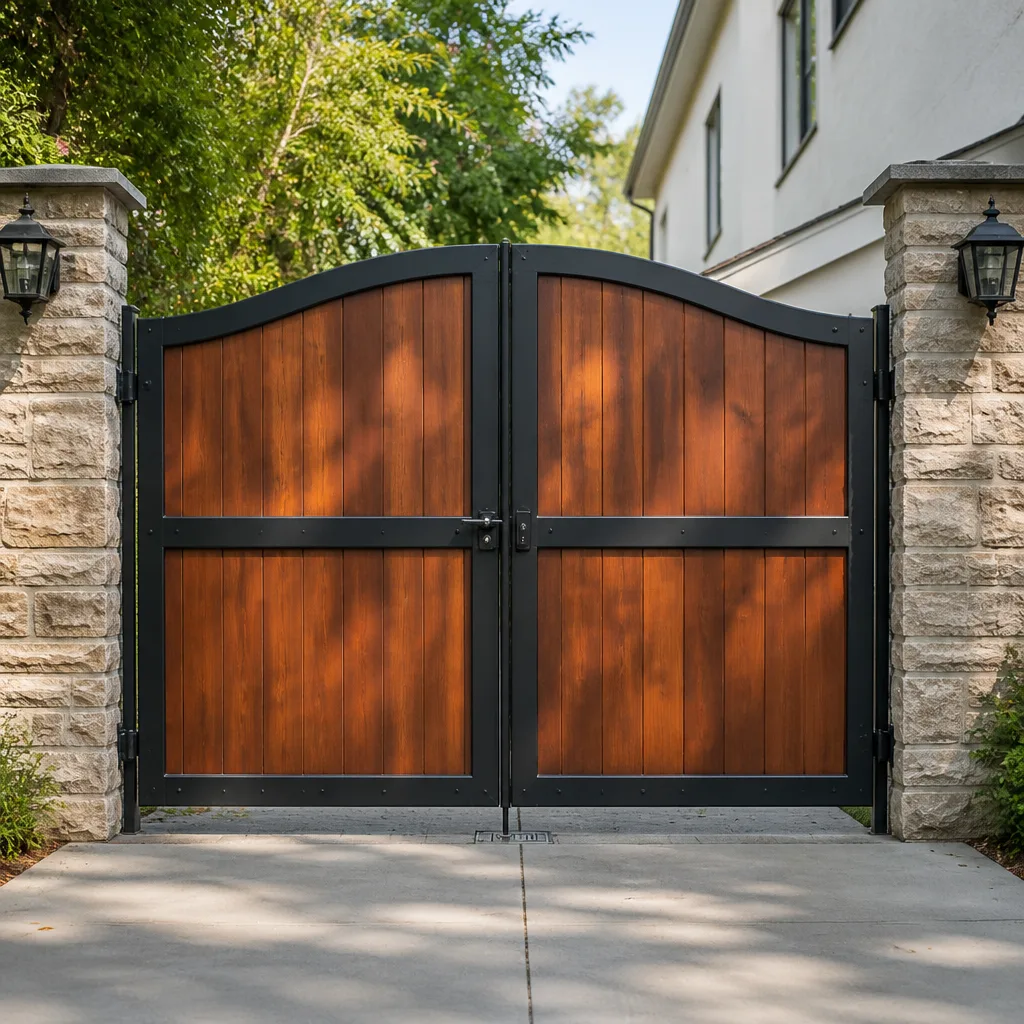 Wood & steel frame
 Farm & ranch
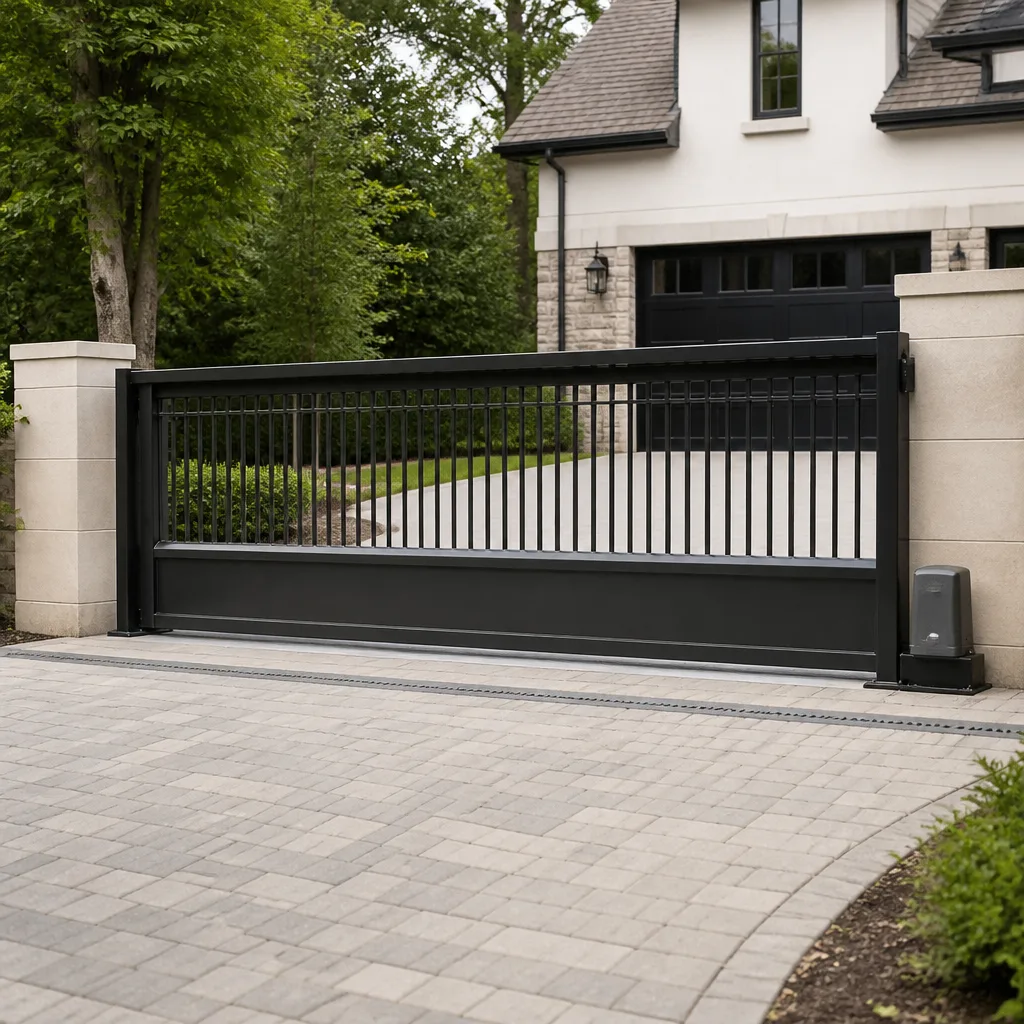 Sliding driveway gates
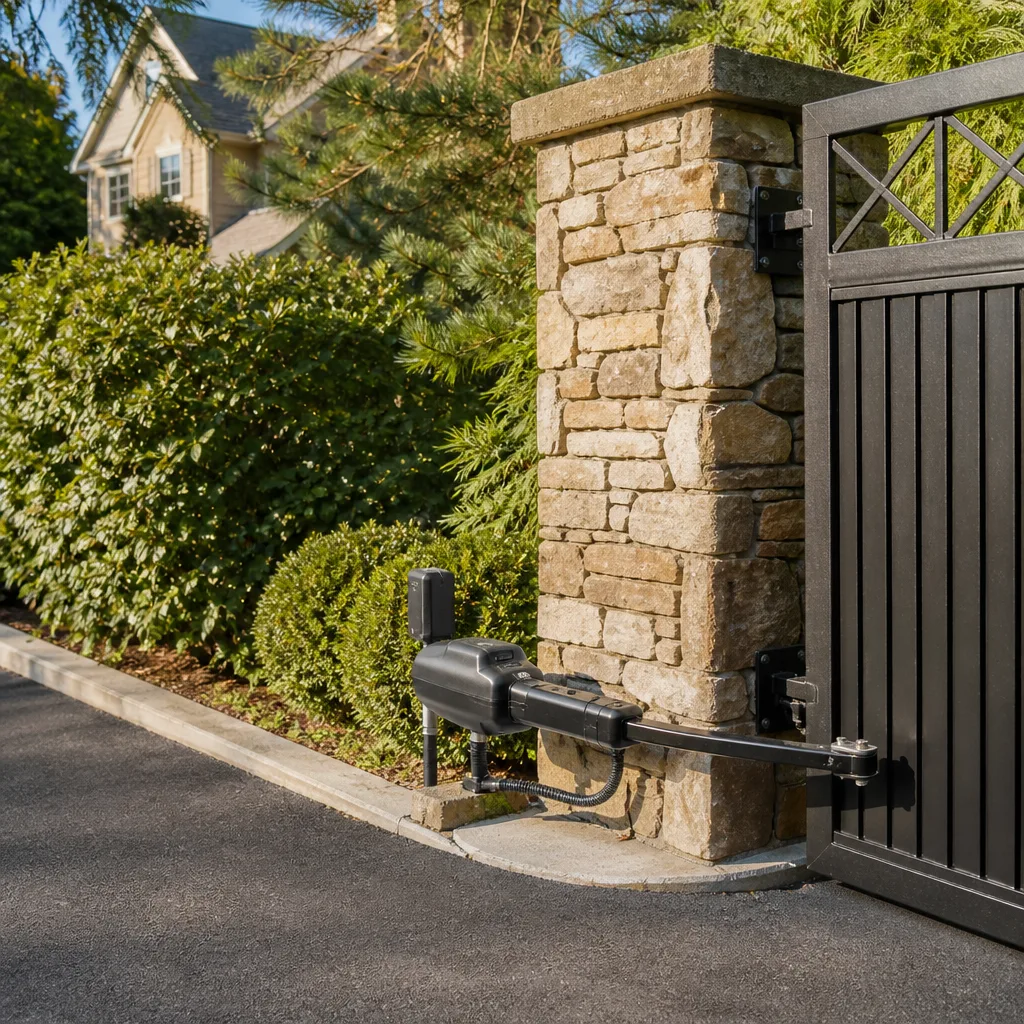 LiftMaster operators
Free on-site gate assessment - hinges, posts, and your LiftMaster or Nice gate operator checked before anything is quoted
The assessment is free and the quote is the invoice.
Get your free estimateThe Complete Guide to Gate Repair in Knoxville
A gate that reverses before it closes isn’t broken. It’s doing exactly what it was programmed to do, responding to a sensor, a limit switch, or an obstruction reading it was designed to catch. That distinction matters more than most people realize, because the fix for each cause is completely different, and guessing wrong is how a small repair turns into a much bigger bill. Most gate problems in Knoxville fall into three categories: mechanical wear, electrical fault, or operator mismatch. This guide gives you a technician’s framework for figuring out which one you’re dealing with, what it usually means, and when it’s time to call someone who works on your specific brand. We’ll cover how Knoxville’s soil affects gate posts, how the major operators fail differently, and what a legitimate repair visit should actually include.
Quick Answer
Gate repair in Knoxville starts with identifying which of three failure categories you have: mechanical (hinges, rollers, posts, tracks), electrical (wiring, power, sensors, control boards), or operator mismatch (the wrong system for the gate’s weight and use). Most residential repairs come down to a worn part or a misread sensor, while commercial failures more often trace to a control board, a loop detector, or a wiring fault. A trained technician diagnoses the category first and quotes the repair before any work starts, so you know the price before anything is touched.
Styles & brands we work with
- Wrought iron
- Wood & steel frame
- Farm & ranch
- Sliding driveway gates
- LiftMaster operators
Table of Contents
- The Three-Category Failure Framework
- Why Knoxville’s Clay Soil Makes Gates Look Broken
- How the Brands Fail Differently in East Tennessee
- Swing Gates vs. Slide Gates: What Breaks and Why
- What a Real Gate Repair Visit Looks Like
- Repair or Replace? How to Decide
- Commercial and Multi-Access Properties
- Seasonal and Weather Factors in Knoxville
The Three-Category Failure Framework
Every gate failure sits in one of three buckets. Sorting your problem into the right bucket before you call anyone is the single most useful thing you can do, because it tells you what kind of technician you need and roughly what to expect.
Mechanical failures are physical. Hinges sag. Roller wheels wear flat. Tracks bend. Posts shift. The gate itself moves poorly, drags, binds, or won’t sit straight. You can usually see or feel a mechanical problem by pushing the gate by hand with the operator disengaged.
Electrical failures involve power, wiring, sensors, and control boards. The gate has power but won’t move, moves partway and stops, opens but won’t close, or triggers on its own. Safety edges, loop detectors, and photo-eye sensors are common culprits because they’re designed to interrupt the cycle.
Operator mismatches are the ones people miss. The operator itself is working fine, but it was sized for a lighter or shorter gate than the one it’s actually driving. The system strains, overheats, trips its breaker, or wears out parts far faster than it should. On a heavier or longer gate, an undersized operator can fail repeatedly no matter how many parts you swap.
Identifying which category you’re in tells you whether you need a gate repair visit for a mechanical fix, an electric diagnostic, or a conversation about the right operator for your gate. Most people can narrow it down in a few minutes by watching the gate cycle and listening to how the motor sounds.
Why Knoxville’s Clay Soil Makes Gates Look Broken
Knoxville sits on heavy clay soil, and that clay moves. It swells when it’s wet and shrinks when it dries, and over a season or two that movement works on gate posts. A post that shifts even a fraction of an inch throws the whole gate out of alignment. Suddenly the gate drags on the ground at one end, the latch won’t catch, the operator has to push harder to move it, and the whole system starts acting like an operator problem when the real cause is underground.
This is one of the most misdiagnosed issues we run into. A homeowner sees the gate struggle to open and assumes the motor is dying. A technician who only checks the operator might agree and sell a new motor, which solves nothing, because the new operator now fights the same misaligned gate. The strain just moves to the new equipment.
Here’s how to tell the difference:
- Disengage the operator and push the gate by hand. If it binds, drags, or won’t swing freely, the problem is mechanical and likely the post or hinge, not the motor.
- Look at the gap under the gate. If it’s uneven across the opening, the gate is sagging, which points to the post or hinge.
- Check the post for lean. A post that’s tilted even slightly out of plumb will throw everything off.
- Watch the gate over a wet spell and a dry spell. If the symptoms change with the weather, the soil is the variable.
Fixing a post problem correctly means addressing the footing, not just cranking the operator up. When we look at a gate in Knoxville, we check the post and footing before we ever touch the electronics, because a gate that fights its own foundation will keep breaking no matter what you replace on top of it.
How the Brands Fail Differently in East Tennessee
The operator on your gate has its own personality, and the brands common in East Tennessee each have failure patterns worth knowing. We work across nine major platforms, including Ghost Controls, DoorKing, Elite, and Mighty Mule, and understanding how each one fails is part of the diagnosis.
Residential openers like Ghost Controls and Mighty Mule are common on driveways here for good reason: they’re approachable and designed for the homeowner who wants automation without a commercial budget. Their failure pattern tends to be mechanical wear on the arm and limit switches that drift out of adjustment over time. A gate that opens fine but reverses partway is often a limit switch that needs resetting rather than a dead operator. These systems are also more sensitive to a gate that’s out of alignment, so the soil issue we covered above shows up as a “motor problem” more often on residential arms.
Commercial-grade systems like DoorKing and Elite fail differently. DoorKing operators are built for heavier duty and often run access control, loop detectors, and entry systems alongside the gate itself. When one of these stops working, the fault frequently sits in the control board, a loop detector that’s been damaged, or the low-voltage wiring rather than the motor. Elite systems are similarly robust but show wear in the gearbox and the slide track on sliding gates after years of service.
What this means for you: the same symptom (“gate won’t close”) has a different likely cause depending on the brand and tier. Brand-agnostic diagnostics matter because we’re not tied to one manufacturer’s parts or one type of fix. We figure out what your specific system actually needs, which is why we can work on your brand rather than pushing you toward whatever a single-brand dealer happens to sell.
Swing Gates vs. Slide Gates: What Breaks and Why
Swing and slide gates fail in different ways because they move differently. Knowing which you have tells you a lot about where to look.
Swing Gates
A swing gate hinges and arcs open. The wear points are the hinges, the operator arm, and the post the gate hangs from. Common failures include:
- Sagging on the hinge side, usually from post movement or worn hinge pins
- Operator arm binding or bending after the gate goes out of alignment
- Latch misalignment that leaves the gate looking closed but not secured
- Limit switch drift, so the gate stops before it fully opens or closes
Slide Gates
A slide gate rolls along a track or hangs from a cantilever. It brings its own failure points:
- Roller wheels wearing flat or seizing, which makes the gate drag
- Bent or obstructed track, especially where debris collects
- The gate coming off its track, which is both a repair and a safety issue given the weight of the panels
- Operator chain or drive wear on chain-driven systems
Slide gates deserve a specific safety note. A heavy sliding panel that comes off its track can crush whatever’s in its path, and the track and rollers carry that entire load. If a slide gate has jumped its track or is leaning, keep people and vehicles clear and get a trained technician to look at it. This isn’t a job to force back into place with a pry bar.
On the electrical side, both gate types have safety edges and sensors, and issues with the operator’s power and wiring are serious. We handle electric gate repair as core work, but wiring and control board problems on any automated gate are best left to someone trained on them rather than tackled as a DIY project.
What a Real Gate Repair Visit Looks Like
A repair visit that just swaps parts is guesswork with an invoice attached. A proper diagnostic visit follows a sequence, and you should be able to recognize it. Here’s what a legitimate gate repair call should include:
- Observe the failure in motion. The technician runs the gate and watches the full cycle, noting where it hesitates, reverses, or stops. The symptom usually points straight at the category.
- Check the mechanical first. Disengage the operator and move the gate by hand. This tells you whether the gate itself moves freely before you blame the electronics.
- Test the electrical and safety devices. Photo-eyes, safety edges, loop detectors, and limit switches get tested one at a time to isolate which one is interrupting the cycle.
- Check the power and wiring. Voltage at the operator, the condition of the low-voltage wiring, and the control board get inspected for faults, loose connections, and moisture damage.
- Confirm the operator matches the gate. The technician checks whether the operator is rated for the gate’s weight, length, and cycle rate. This is where a lot of “repeated failure” mysteries get solved.
- Quote the repair in writing before touching anything. You get a price for the actual fix, and the work doesn’t start until you agree to it.
The difference between diagnostics and parts swapping is cost. A technician who skips the mechanical check and replaces the control board won’t fix a gate that’s dragging on its track. A technician who diagnoses first fixes the real cause and leaves the working parts alone. That’s the difference between a balance on your invoice that reflects a real solution and one that reflects trial and error.
Repair or Replace? How to Decide
This is the question that matters most, and there’s no single answer. But there is a clear framework, and it comes down to how far along the system is and what a repair actually buys you.
A repair makes sense when the failure is isolated. One worn roller, one misadjusted limit switch, one sensor with a bad connection, a post that needs resetting. When the operator is sized correctly for the gate, the frame is sound, and the failure is a specific component, fixing it is the right call and usually the least expensive path.
Replacement starts making sense when you’re repairing the same system repeatedly and the underlying cause keeps coming back. A few signals point that way:
- The operator is clearly undersized for the gate and has failed multiple times
- Parts for the existing system are no longer available
- The gate’s mechanical structure is failing across multiple points, not one
- You’re paying for repairs faster than the system’s age justifies
There’s also the delay trap to watch for. Replacing a worn part to squeeze a few more months out of a system that’s failing everywhere else can end up costing more than a straight replacement, because each repair is a separate visit and a separate invoice. The honest approach is to tell you which situation you’re in. If a repair will genuinely extend the life of your system, that’s what we recommend. If you’re delaying an unavoidable replacement, you deserve to know that too. A brand-agnostic view helps here, because the recommendation follows what your gate needs rather than what a single manufacturer wants to sell.
Commercial and Multi-Access Properties
Commercial gates fail with higher stakes and higher complexity. A residential gate stuck open is a security gap. A commercial gate stuck closed is an access emergency that halts deliveries, blocks tenants, or shuts down a facility entrance. On a multi-access property, one failed loop detector can back traffic up across a whole lot.
The commercial failures we see most come down to access control integration and wear from volume:
- Loop detectors that fail or get damaged, leaving the gate unable to sense a vehicle and open or close correctly
- Control boards that fault from power issues or moisture, taking the whole system offline
- Wiring faults in the low-voltage runs between the operator, the access device, and the entry system
- Track and gearbox wear on high-cycle slide gates that run hundreds of times a day
Property and facility managers need two things: a technician who can work on the specific system already installed, and a clear answer on what’s wrong before anyone commits to a fix. On systems like DoorKing, the gate and the access control are tightly linked, so a problem that looks like a gate failure can actually live in the entry system. Sorting that out requires fluency across the whole setup, not just the motor. We serve both residential driveways and commercial or multi-access properties across Knoxville, and the brand on your property determines the diagnostic path.
Seasonal and Weather Factors in Knoxville
Knoxville’s weather works on gates year-round, and the seasons change which problems show up. The wet spring and fall shrink and swell the clay soil, which is when post movement and alignment issues surface. Summer heat stresses operators and control boards, and it’s when overheated or undersized systems start to show strain. Winter brings freeze-thaw cycles that move posts and can crack or seize mechanical parts.
Debris matters too. Fallen leaves, twigs, and grit collect in tracks and around rollers, which is one of the simplest causes of a slide gate that suddenly starts dragging. Before you assume a mechanical failure, clearing the track is worth a look, though anything beyond surface debris and a bent track or a skipping roller is a job for a technician.
None of this is unique to one neighborhood. From the older lots near downtown to newer subdivisions further out, the same soil and weather put the same pressure on gate systems. The difference is how each setup was installed and how well the footing was done in the first place. A gate set on a proper footing holds through the seasons far better than one that wasn’t, which is why post work is worth doing right rather than patch-fixing.
Common Mistakes to Avoid
- Blaming the motor for a mechanical problem. If the gate won’t move freely by hand with the operator disengaged, the motor isn’t your first suspect. Chasing the electronics on a gate that’s binding wastes money and leaves the real cause in place.
- Ignoring post movement. Knoxville’s clay soil moves, and a post that’s out of plumb throws off everything downstream. If the gate drags or won’t latch, check the post and footing before you replace parts on the operator.
- Replacing parts without diagnosing. A new control board on a gate with a bad loop detector or a misadjusted limit switch fixes nothing. Each component needs to be tested, not guessed at.
- Buying an operator based on price alone. An undersized operator on a heavy or long gate works hard, overheats, and fails repeatedly. Match the operator to the gate’s weight, length, and cycle rate.
- Forcing a slide gate back onto its track. A heavy panel that’s come off its track can crush what’s in its path. Keep clear and get a trained technician to handle it.
- Ignoring a stuck gate because “it still opens.” A gate that’s stuck open leaves your property exposed. Security and access problems don’t fix themselves, and delay usually costs more than an early repair.
- Letting one contractor install and another repair. When installation and repair live with different providers, each one points at the other when something fails. Keeping both with one provider removes that gap.
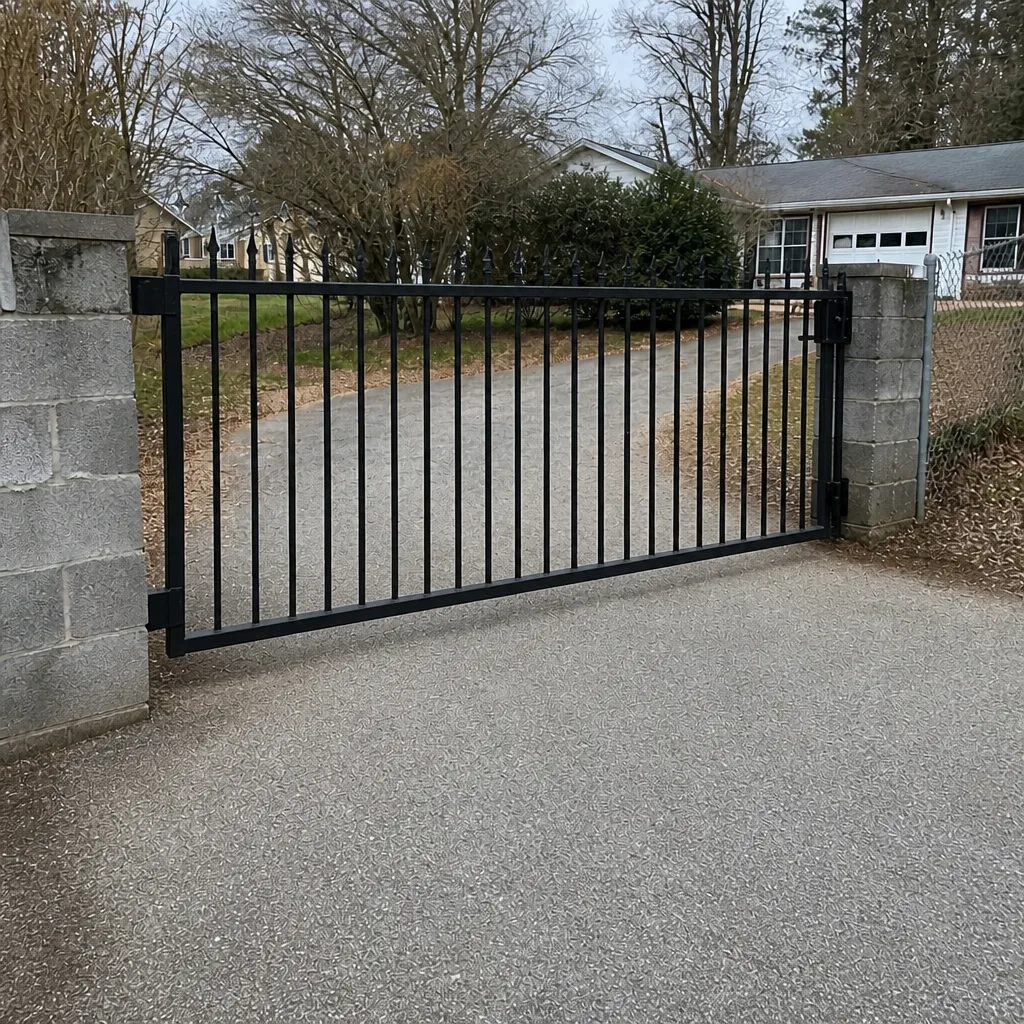
See the difference
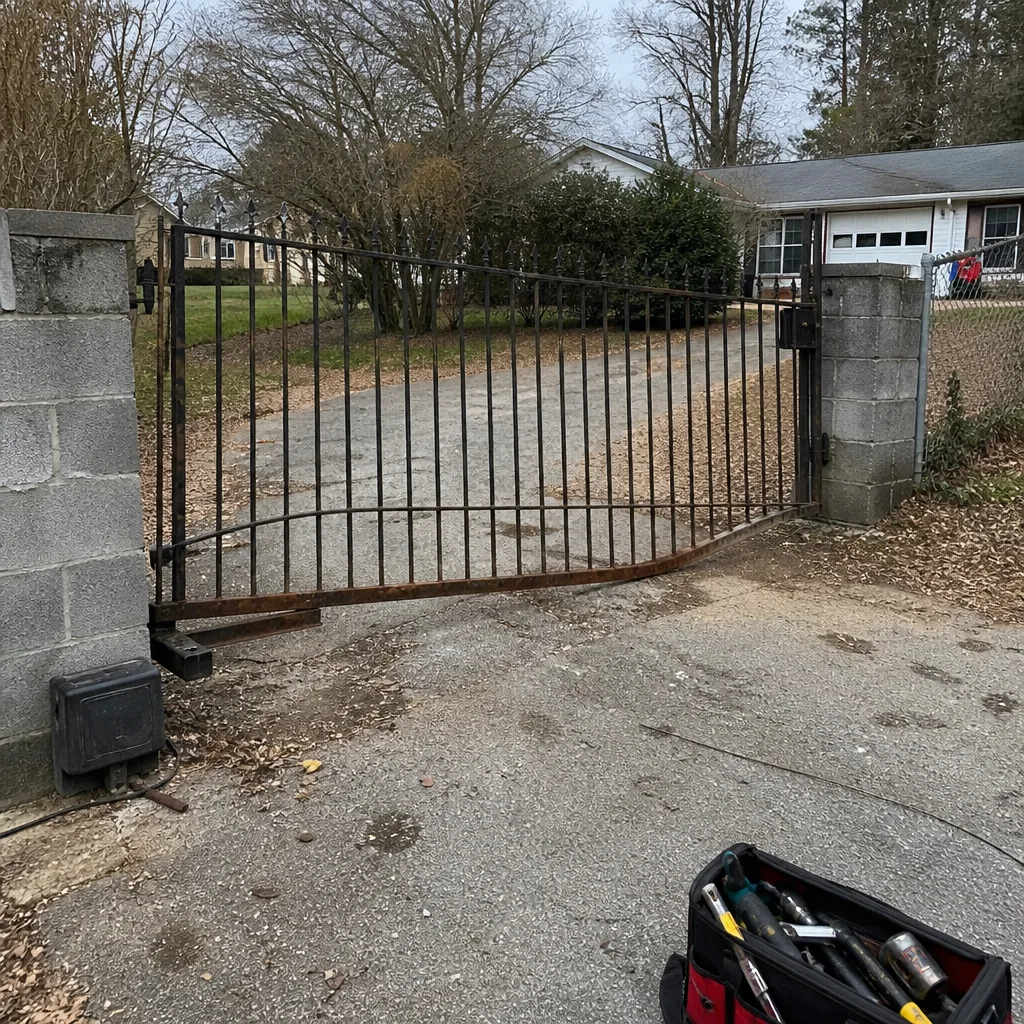 Before
 After
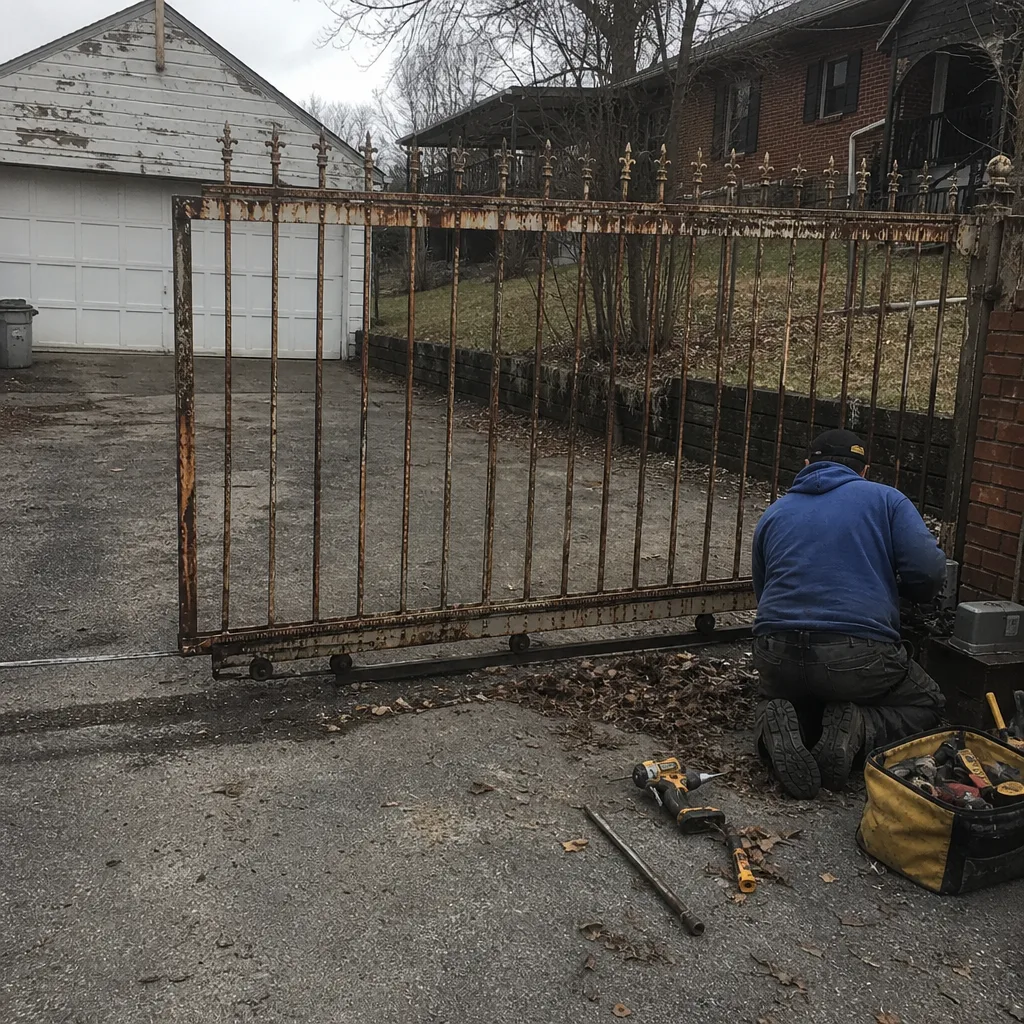 Before
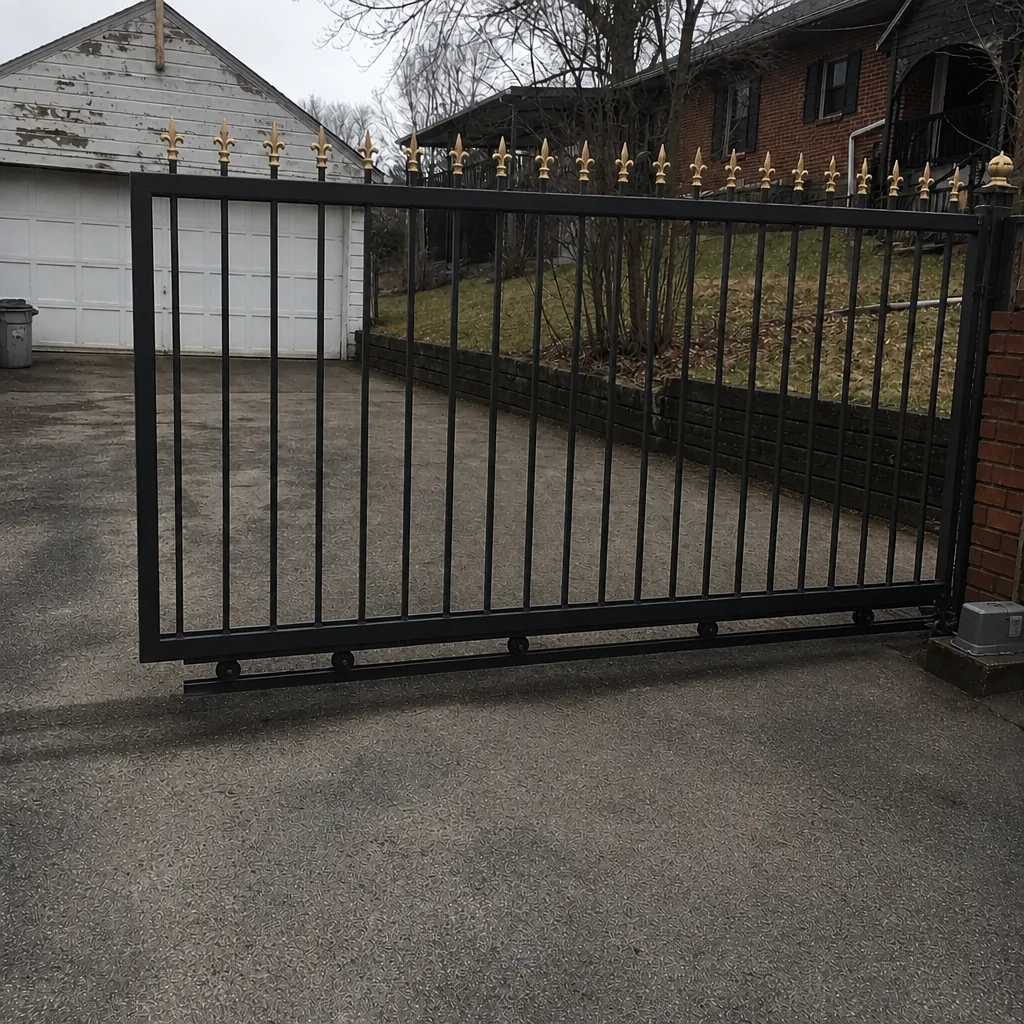 After
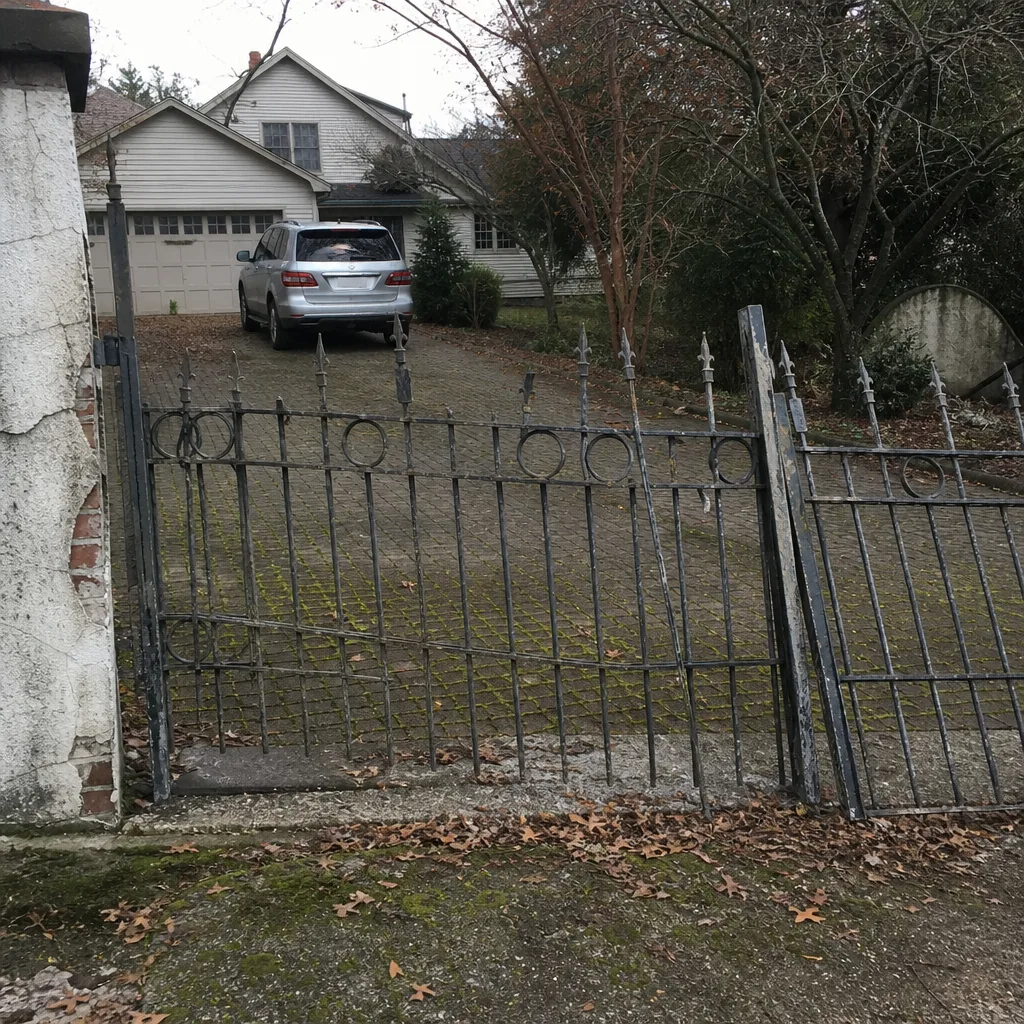 Before
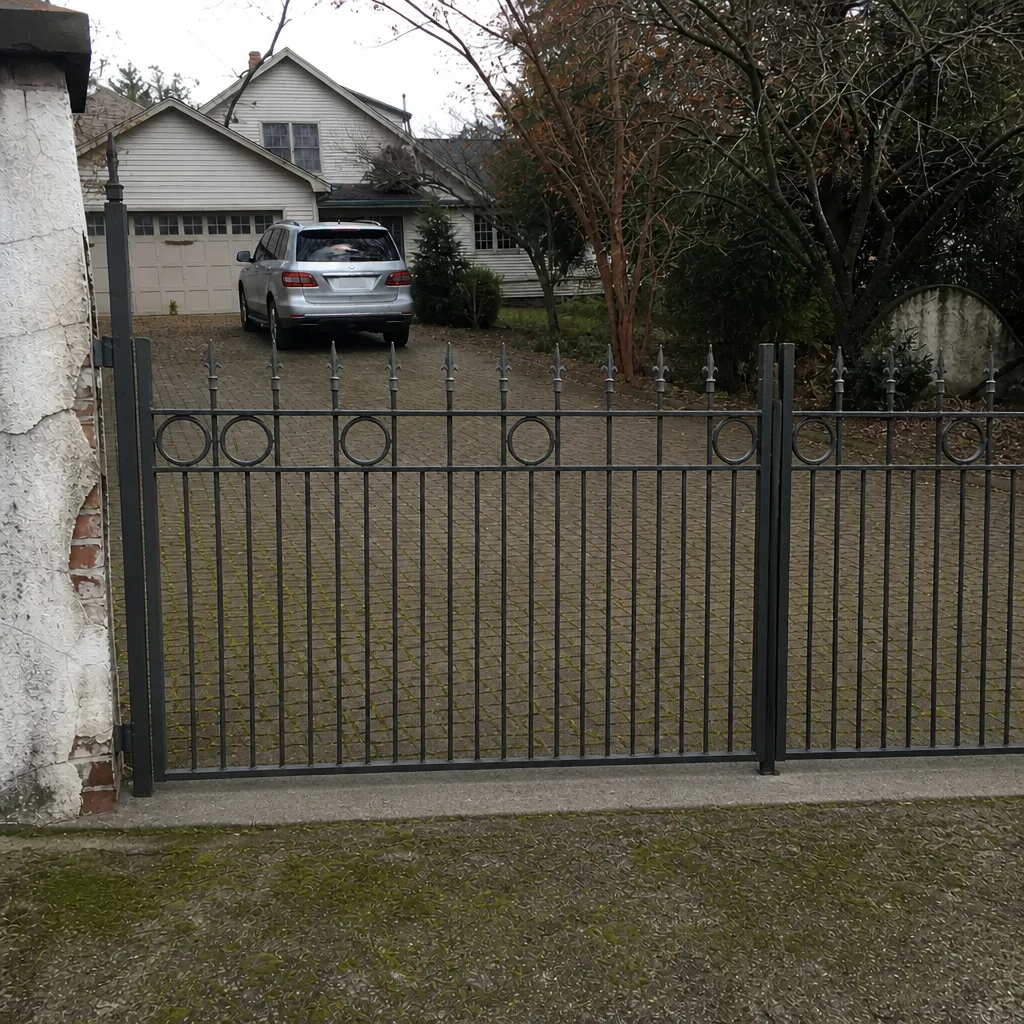 After
When to Call a Professional
Some gate issues are safe to check yourself: a visible obstruction in the track, debris around a roller, a loose latch, or a gate that moves freely by hand but won’t cycle. Anything involving the operator’s power, the control board, the wiring, or the safety edges should go to a trained technician, because those systems carry real risk and a wrong move can damage the equipment or compromise the safety devices that protect people and vehicles. Call a professional when the gate reverses without an obvious obstruction, when it moves on its own, when it’s stuck open and leaving your property exposed, when a slide gate has come off its track, or when the same part has failed more than once. Gate Repair Knoxville offers free estimates in Knoxville: call (866) 361-6964. We answer 24/7, with fast dispatch from 7am to 7pm, Sunday through Friday, and our technicians have up to 9 years of experience working across residential and commercial gate systems.
Frequently Asked Questions
The cost depends on which category your failure falls into. A worn roller or a misadjusted limit switch is a small, straightforward repair, while a control board, a loop detector, or post and footing work is a larger job. Every price is set per job by a written estimate, quoted and agreed before any work starts, so you know the number before anything is touched. Call (866) 361-6964 for a free estimate, and we’ll diagnose it properly before quoting.
A gate that reverses before closing is usually responding to a safety device: a photo-eye sensor, a safety edge, or a limit switch reading an obstruction. It can also be an obstruction in the gate’s path or a sensor that’s out of alignment. The fix is different for each cause, which is why diagnosis matters. A technician tests each device to isolate the one interrupting the cycle rather than replacing parts on a guess.
In many cases, yes. We provide same-day service when the schedule allows, with fast dispatch from 7am to 7pm, Sunday through Friday, and we’re closed Saturday. A call that comes in outside dispatch hours is booked into the next opening. For the fastest response, call (866) 361-6964 and describe what the gate is doing. We answer 24/7.
We work across nine major gate platforms, including LiftMaster, FAAC, BFT, Linear, Viking, Ghost Controls, DoorKing, Elite, and Mighty Mule. That spans DIY-adjacent residential openers through industrial-grade commercial access systems, so whether your gate is a driveway opener or a commercial entry system, we can diagnose and repair it. Call (866) 361-6964 and tell us the brand; we’ll confirm the visit.
In Knoxville, it’s often the post. The clay soil here swells and shrinks with moisture, and that movement shifts gate posts out of alignment. To tell the difference, disengage the operator and push the gate by hand. If it binds or drags, the problem is mechanical and likely the post, hinge, or roller. If it moves freely and the motor still struggles, the fault is more likely electrical or the operator itself. Either way, a technician can confirm the cause before quoting the fix.
Repair is the right call when the failure is one isolated component and the operator is correctly sized for the gate. Replacement starts making sense when the same system keeps failing, the operator is undersized and has failed repeatedly, parts are no longer available, or the gate’s mechanical structure is failing across multiple points. The honest answer depends on your specific system, and a brand-agnostic technician can tell you whether a repair will genuinely extend its life or just delay a replacement. Call (866) 361-6964 for a diagnosis and a written estimate.
The Bottom Line
Most gate problems in Knoxville fall into one of three categories: mechanical wear, electrical fault, or operator mismatch. Sorting your problem into the right category before calling anyone tells you what kind of fix you need and keeps you from paying for the wrong one. Check the mechanical first by moving the gate by hand, watch for the post movement that Knoxville’s clay soil causes, and don’t let a repeated failure go undiagnosed. When you do call, look for a visit that diagnoses before it swaps parts. We work on nine major brands, handle electric gate repair and installation alongside repair work, and diagnose without a brand bias, so the recommendation follows what your gate actually needs. Call (866) 361-6964 for a free estimate. We answer 24/7, with fast dispatch from 7am to 7pm, Sunday through Friday.
Written by the team at Gate Repair Knoxville.