
Last updated November 15, 2026
 Wrought iron
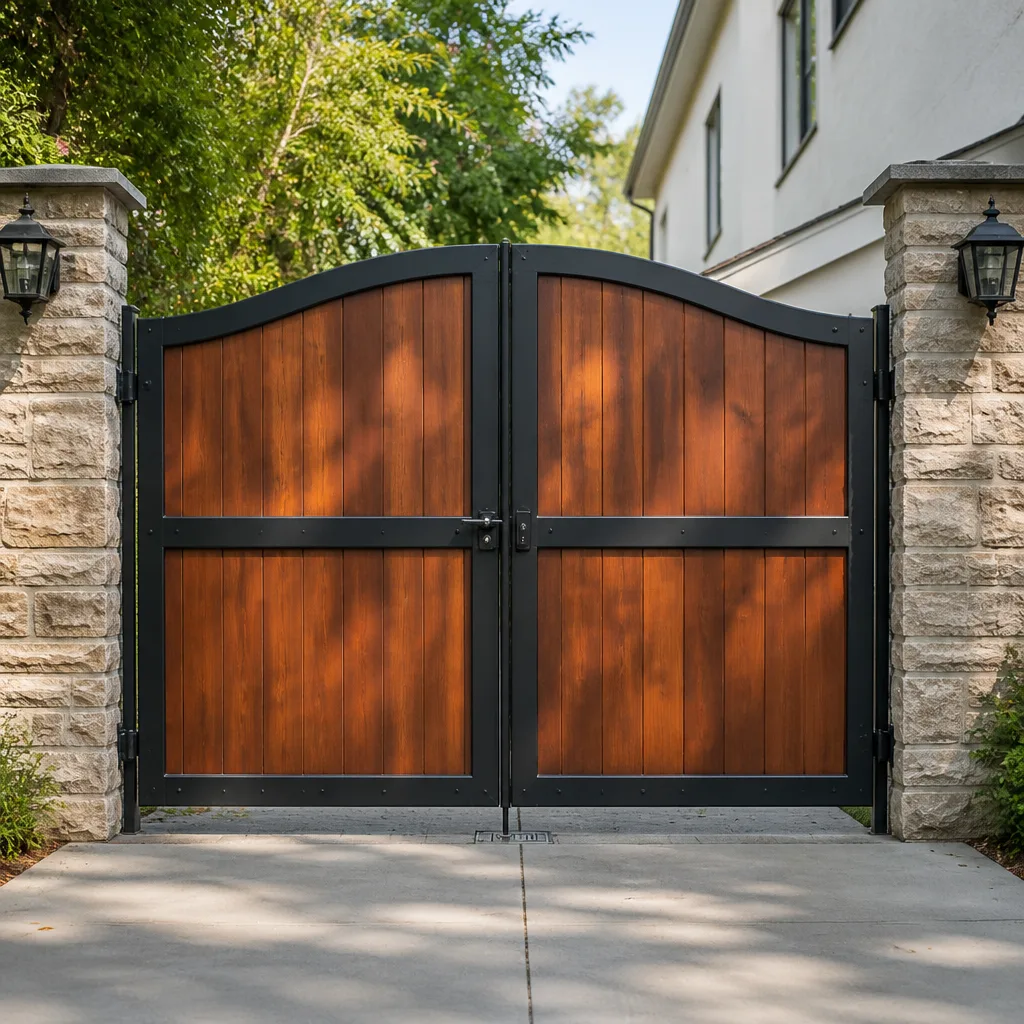 Wood & steel frame
 Farm & ranch
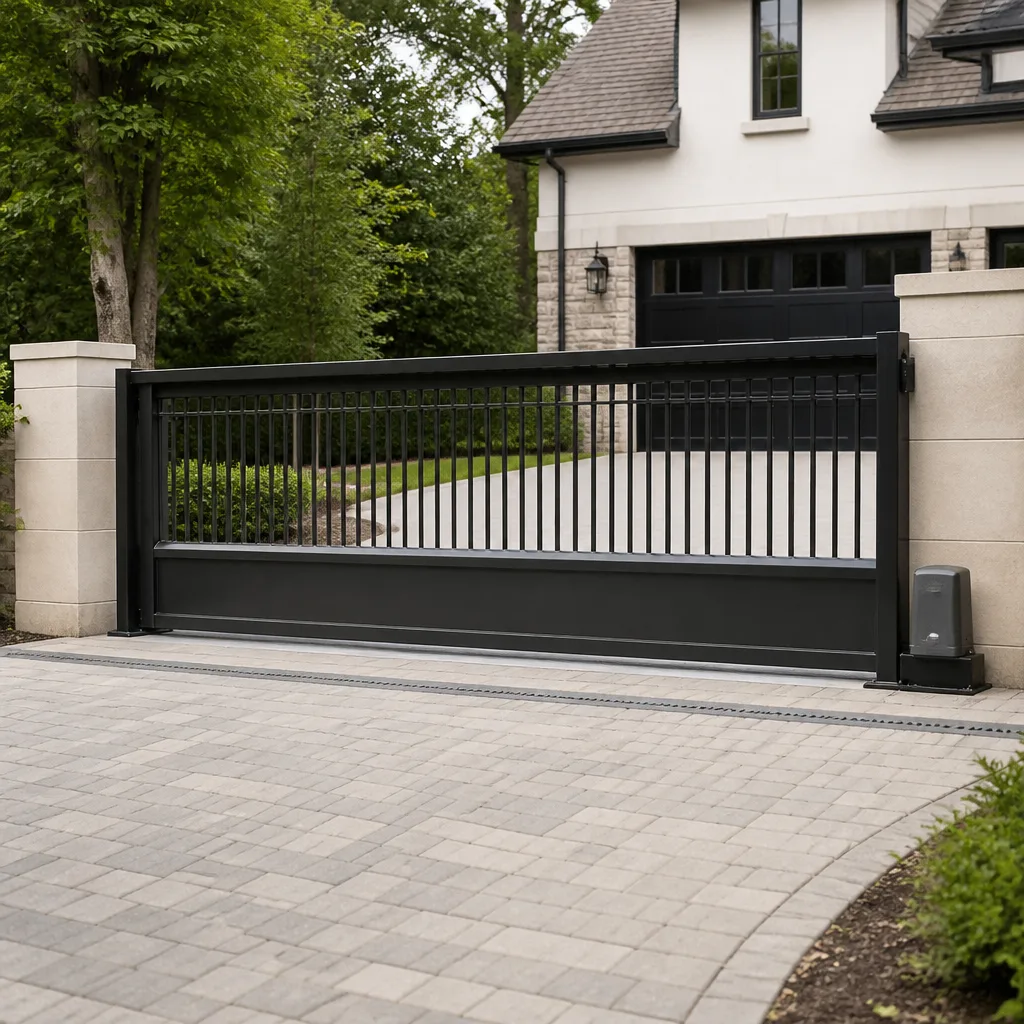 Sliding driveway gates
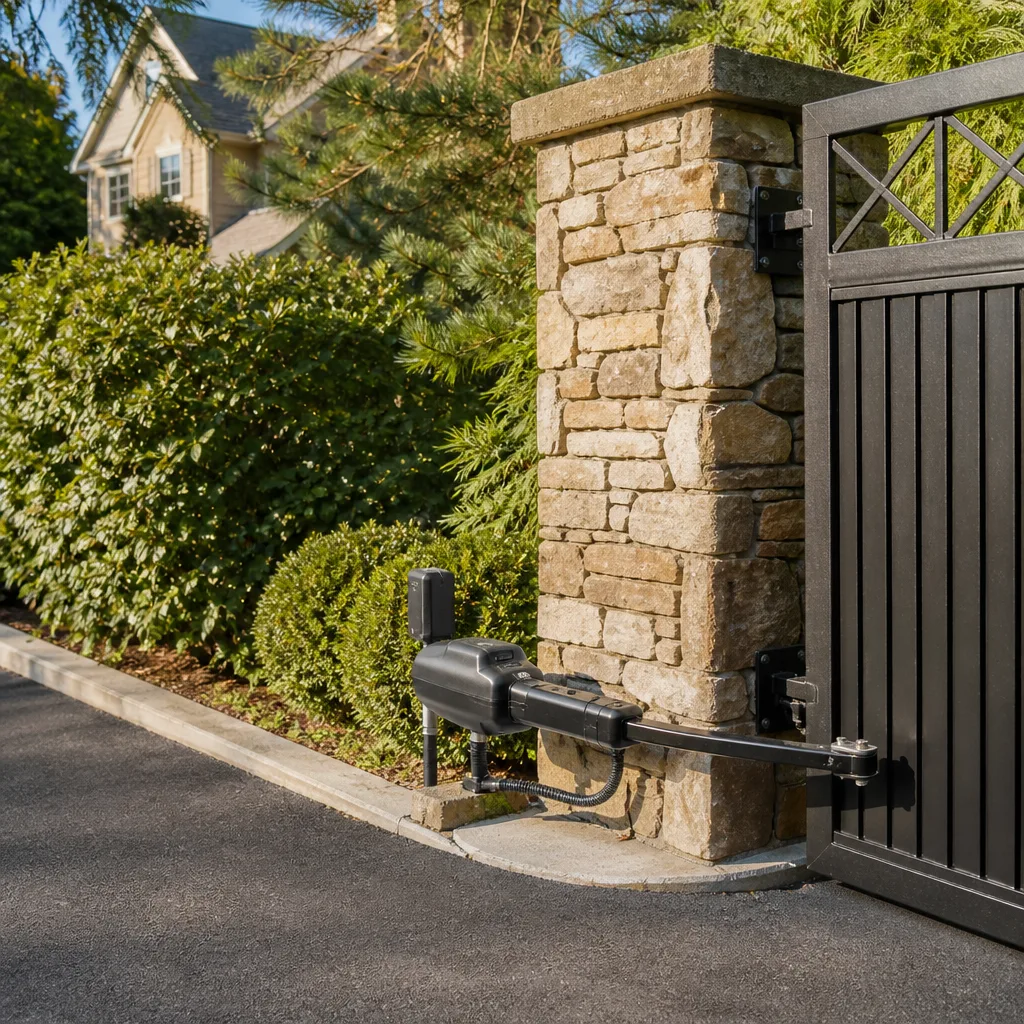 LiftMaster operators
Free on-site gate assessment - hinges, posts, and your LiftMaster or Nice gate operator checked before anything is quoted
The assessment is free and the quote is the invoice.
Get your free estimateDIY vs Professional Gate Repair: The Knoxville Homeowner’s Decision Guide
Most gate repair advice draws the line at confidence. “If you’re handy enough, try it yourself.” That’s the wrong test. The real dividing line is the component. A gate operator runs on low-voltage logic that a careful homeowner can troubleshoot without danger, but that same enclosure holds line voltage feeding the transformer, and the two sit inches apart. One circuit is safe to touch. The other can hurt you, and in Knoxville the repair that follows an amateur electrical mistake gets expensive fast. This guide breaks gate work down part by part, so you know exactly which jobs you can take on and which ones belong with a trained technician.
Quick Answer
Some gate repairs are genuinely safe to do yourself: cleaning photo eyes, reprogramming a remote, lubricating hinges and rollers, and clearing debris from a track. Anything that touches line voltage, the control board, a heavy panel that could fall, or a slide gate that has jumped its track belongs with a trained technician. The dividing line is the component and its risk, not how confident you feel, and it doesn’t move because you watched a video.
Styles & brands we work with
- Wrought iron
- Wood & steel frame
- Farm & ranch
- Sliding driveway gates
- LiftMaster operators
Table of Contents
- The Component-Level Test: What’s Actually Safe to DIY
- Why Voltage, Not Skill, Is the Real Risk
- Liability in Tennessee: What a DIY Repair Can Cost You Later
- Tools, Costs, and Where DIY Stops Paying Off
- Brand by Brand: Which Operators Are DIY-Friendly
- The Hybrid Approach: Diagnose Yourself, Hand Off the Fix
- Commercial and Multi-Access Properties: A Different Calculation
- Knoxville Conditions That Affect Gate Wear
The Component-Level Test: What’s Actually Safe to DIY
The question isn’t whether you’re capable. It’s whether the component carries a risk that no amount of care can fully remove. Gate systems break down into three tiers, and each tier has a clear answer.
Genuinely DIY-safe
- Photo eye cleaning. A dirty lens on a safety sensor mimics a dozen different faults. Wiping both eyes with a soft cloth and checking the alignment is safe, free, and fixes more “gate won’t close” calls than anything else.
- Remote and keypad reprogramming. Adding a remote, clearing a lost code, or resetting a wireless keypad is a menu task on most residential operators.
- Lubrication and debris clearing. Hinges, rollers, and slide tracks collect grit. A dry lubricant and a broom handle most squeaks and drags.
- Battery replacement in remotes and keypads. Simple, and worth doing before you assume the operator is failing.
- Visual inspection. Look for bent hinges, loose bolts, frayed wires, and rust. You’re gathering information, not repairing anything.
Borderline: handle with care or not at all
- Manual release operation. Knowing how to disengage the operator by hand is essential during a power outage, but a heavy swing gate can swing free once released. If the gate is on a slope, don’t do this alone.
- Limit switch adjustment. On some brands this is a homeowner-accessible screw. On others it’s buried in a dealer menu. Adjust it wrong and the gate drives into its stop and damages the operator.
Professional territory
- Anything inside the operator housing. Control boards, transformers, wiring, and terminal blocks all live together behind that cover.
- The 120V or 240V power feed. This is line voltage. It doesn’t care how careful you are.
- Loop detectors and buried wiring. Vehicle detection loops are cut into the driveway and run back to the operator. Diagnosing them takes a meter and experience.
- Heavy panels, sagging gates, and slide gates off the track. A residential driveway gate can weigh hundreds of pounds. Crush injuries happen when a panel gets away from someone.
If your gate problem falls in the third tier, that’s the point to bring in a specialist. Our electric gate repair work starts exactly here, because electrical faults are where DIY gate work turns dangerous.
Why Voltage, Not Skill, Is the Real Risk
Here’s the gap between “I watched a video” and “I know what I’m doing.” Inside nearly every automatic gate operator, two electrical circuits sit within inches of each other. The logic side runs on low voltage, typically 24V, and that side is genuinely safe to handle with your bare hands. The power side draws from a transformer fed by 120V or 240V of household current, and that side is lethal. The transformer, the wiring to the motor, and the line terminals often share the same enclosure with the low-voltage control board.
A homeowner troubleshooting a control board with a multimeter can easily bridge the two circuits without realizing it. Even a brief contact with the line-voltage side is enough to cause serious injury, and the risk isn’t limited to a shock. A miswired operator can back-feed power through the system, damage the board, or turn a repairable fault into a full operator replacement.
The same logic applies to a gate that stalls or reverses unexpectedly. The symptom you see on the outside, a gate that won’t close, could be a photo eye, a shorted wire, a failing control board, or a bad limit switch. Diagnosing which one it is requires a voltmeter and the safety discipline to know when you’re standing in the wrong place to use it. That’s true on a residential LiftMaster operator and it’s true on a commercial FAAC system. The voltage doesn’t care what brand it’s feeding.
If your gate has stopped responding entirely, that’s the moment to stop troubleshooting and let a trained technician look at it. We cover the full range of automated failures on our Gate Repair Knoxville page, and we can tell you over the phone whether your symptom belongs in DIY territory or not.
Liability in Tennessee: What a DIY Repair Can Cost You Later
This is the consequence most homeowners don’t think about until something goes wrong. A gate that hurts someone or damages a vehicle has to be explained, and the explanation starts with who worked on it. If you handled a repair yourself, and especially if that repair touched the electrical side, the insurance and legal picture changes.
Tennessee, like most states, expects electrical work on a residential property to be done correctly and inspected where required. Whether a permit is needed for your specific gate work depends on the scope, and a good rule is to call your local building department and ask before you touch anything permanent. Unpermitted electrical work can complicate a homeowner’s insurance claim if a gate-related injury or property damage takes place later, because the insurer will ask how the system was installed and who did it.
Courts look at whether the work was done to a professional standard and whether the person doing it had the knowledge to do it safely. A gate operator wired by a homeowner isn’t automatically a liability, but it puts the burden of proof squarely on the homeowner if a claim arises. That’s a hard position to be in, and it’s one that a professional repair avoids entirely.
There’s also the practical exposure. A gate is the boundary of your property. If it fails open after an amateur fix, your driveway, yard, and possibly an unsecured entry are exposed until it’s corrected. If it fails closed, you may not be able to get a vehicle out. Either way, the repair has to happen, and it’s cheaper to do it once than to do it wrong and then do it again.
The short version: the electrical side of a gate is where DIY crosses from a smart savings into a liability. Leave it to a technician.
Tools, Costs, and Where DIY Stops Paying Off
DIY gate work makes financial sense only when the tool you need is one you already own or can buy cheaply. Once you’re buying specialized equipment to save a service call, the math flips.
The realistic DIY toolkit
- A screwdriver set, both Phillips and flathead
- An adjustable wrench and a socket set
- Penetrating oil and a dry lubricant spray
- A soft cloth and a small brush for photo eyes and tracks
- A flashlight for inspecting behind the operator cover without touching anything
That list is enough for cleaning, lubrication, remote work, and visual inspection. It costs almost nothing and it fixes a surprising share of common complaints.
Where the cost flips
The moment you need a digital multimeter to test a control board or a circuit, you’re spending money on a tool you’ll use once and a skill you don’t have. Add the cost of a replacement control board if you diagnose wrong, and the “savings” is gone. Commercial-grade operators can be worse: some brands require dealer-level software to reset a system after a board swap, so even a correct DIY diagnosis can leave you stuck.
This is where a free estimate becomes the cheaper option. There’s no charge to have someone look, and our technicians have up to 9 years of experience reading the failures homeowners most often misdiagnose. A written estimate before any work starts means the price is agreed before a tool comes out.
We handle diagnostics on every major residential and commercial platform we work with, including LiftMaster, FAAC, BFT, and Linear. If you’ve already done the easy steps and the gate still won’t work, call us for a free estimate and see what the diagnosis costs versus what you’d spend guessing.
Brand by Brand: Which Operators Are DIY-Friendly
Some gate operators are built with the homeowner in mind; others are built for dealers. Knowing which one is on your property tells you how much of the troubleshooting you can legitimately do.
Homeowner-accessible brands
Entry-level residential operators generally include a learn button or a menu-based setup that lets you pair remotes, adjust limits, and read basic fault codes. Brands in this tier are designed for quick consumer setup and offer a real opportunity for homeowner diagnosis. If your gate has a simple fault indicator and a clearly labeled control layout, you can often find the problem on your own.
That doesn’t mean the electrical side is safe. It means the diagnostics are readable. The repair, if it involves the control board or the power feed, still belongs with a trained technician.
Dealer-oriented brands
Commercial and heavy-duty operators often hide their most important settings behind a password, a laptop cable, or a diagnostic menu the manufacturer doesn’t publish. Fault codes on these systems don’t translate to plain English; they translate to a service procedure. A homeowner can’t meaningfully service one of these without dealer access, and attempting to on a loaded commercial gate risks more than the operator.
In our experience, this is where homeowners end up calling after a full day of trying. A gate that doesn’t respond to the standard reset on a dealer-grade system usually has a control or wiring issue that a meter and a manual will sort out far faster than trial and error.
How to tell which one you have
- Read the label inside the operator cover: brand, model, and manufacture year.
- Look for a learn button or a setup menu with remotes and limits.
- Check whether the manual was printed for installers or for homeowners.
- Look for a fault code display. If there isn’t one, you’re likely in dealer territory.
Once you know the brand, a quick call settles the rest. We work on residential and commercial gate systems across Knoxville and can tell you if a brand is DIY-friendly or not.
The Hybrid Approach: Diagnose Yourself, Hand Off the Fix
You don’t have to choose between full DIY and a blind call. The hybrid approach saves money without creating risk: do the diagnostic work yourself, then hand off only the repair that needs a technician. Here’s how to run it.
- Start with the free stuff. Clean the photo eyes, clear the track, lubricate the rollers, and test with a second remote. If the gate works, your problem was environmental.
- Write down the symptom precisely. “Gate reverses halfway closed” and “gate won’t move at all” point to different faults. Note any blinking light codes and what the gate was doing when the fault appeared.
- Check the obvious electrical signs from outside the enclosure. Look for a tripped breaker, a disconnected wire at an external junction, or a vehicle sensor loop that’s been cut by construction or frost heave. Don’t open the operator housing.
- Confirm what you’ve ruled out. If the eyes are clean, the remotes work, the track is clear, and the gate still fails, you’ve likely narrowed it to the operator, the wiring, or the control board.
- Call and hand off the fix. Tell the technician what you’ve done and what you’ve observed. That saves diagnosis time, and diagnosis time is what you’re paying for on the visit.
This approach works because most gate calls fall into a handful of categories. If you’ve eliminated the easy ones, you’ve done the technician’s first twenty minutes of work. If you’re not sure whether you’ve eliminated them, a quick phone conversation is free and we’re happy to talk it through before you schedule an estimate. That’s the same no-drama diagnostic help we give every homeowner who calls. For a broader look at the kinds of repairs that typically end up with us, see our guide to gate repair.
Commercial and Multi-Access Properties: A Different Calculation
If you manage a facility with one or more automated gates, the DIY math changes completely. A homeowner deciding whether to open an operator cover is making a personal risk decision. A property manager doing the same thing is exposing a business to liability that no repair savings can justify.
Commercial gate environments add complications that residential systems don’t have:
- Vehicle loops and access control. Card readers, keypads, and loop detectors usually tie into a central system. A DIY repair on one gate can disrupt every access point tied to it.
- Heavier hardware. Commercial slide gates and swing gates weigh far more than residential panels. A panel that gets away from a technician is an injury; a panel that gets away from a manager is a workers’ comp claim.
- Dealer-locked controllers. Most commercial operators require proprietary software for anything beyond a reset. There’s simply no homeowner-grade path in.
- Codes and inspections. Multi-tenant or commercial properties may face inspection requirements that a self-repair won’t satisfy. Check with your local building authority before you touch anything.
We work on the commercial side of the brand spectrum, including FAAC and BFT systems, as well as residential operators like LiftMaster and Linear. The work is the same discipline, but the diagnosis and the paperwork are different. A written estimate keeps the price clear before anything starts.
Knoxville Conditions That Affect Gate Wear
Gate hardware wears faster in some environments than others, and Knoxville’s weather knocks things loose in predictable ways. The region sits in a humid subtropical zone with hot, wet summers and freezing spells in winter. That combination is hard on outdoor machinery.
What it means for your gate, year to year:
- Summer heat and humidity swell wooden panels, stiffen old lubricant, and speed up corrosion on hinges and exposed wiring connections.
- Winter freeze-thaw cycles heave the soil around posts and buried loop wiring. A gate that hasn’t moved all winter can come back out of alignment in spring.
- Spring storms and wind push gates and their posts, and every gust pressures the operator and limits. Loose posts are a common cause of “gate works sometimes.”
- Leaf and debris buildup collects in slide tracks and around photo eyes every autumn, which mimics an electrical failure.
Most of those conditions are manageable with a seasonal inspection. Check the track, clear the debris, test the photo eyes, and watch for post wobble. If the gate starts moving unevenly or the operator works harder than it did last year, that’s the moment to have someone look at it before the fault gets more expensive. These are the same wear patterns we see across gate systems throughout Knoxville.
Common Mistakes to Avoid
- Opening the operator housing to “take a look.” Even if you don’t plan to touch anything, reaching into a live enclosure is a hazard. Look through the cover, not inside it.
- Assuming a gate that won’t close needs a new operator. In our experience, most “dead operator” complaints trace to photo eyes, limit switches, or wiring. A technician diagnoses before replacing.
- Skipping the manual release test. If your gate won’t release by hand during a power cut, you have a bigger problem than an outage. Test it before you need it, but do it carefully with a second person around a heavy gate.
- Buying parts online before diagnosing. A control board that doesn’t fix the problem is money gone. Diagnose first, then buy.
- Repeatedly resetting a tripping breaker. If a breaker trips after a gate fault, stop resetting it. Something in the electrical path is failing, and that’s a call, not a reset.
- Ignoring post movement. A gate on a loose post strains the operator every time it moves. Fix the post before the operator pays for it.
- Letting a failing gate sit open overnight. A gate stuck open is a security gap, not just an inconvenience. If it happens, call us and we’ll book you for the next opening, Sunday through Friday.
See the difference
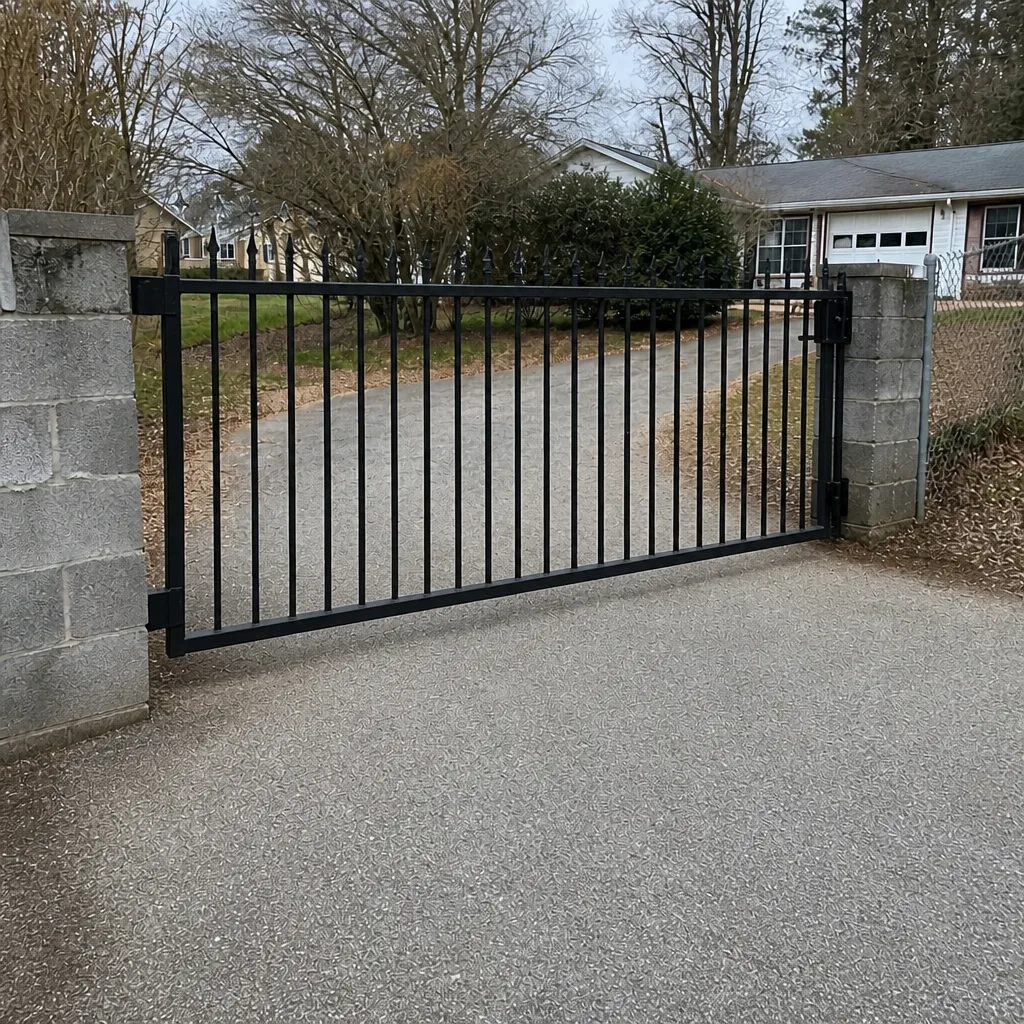
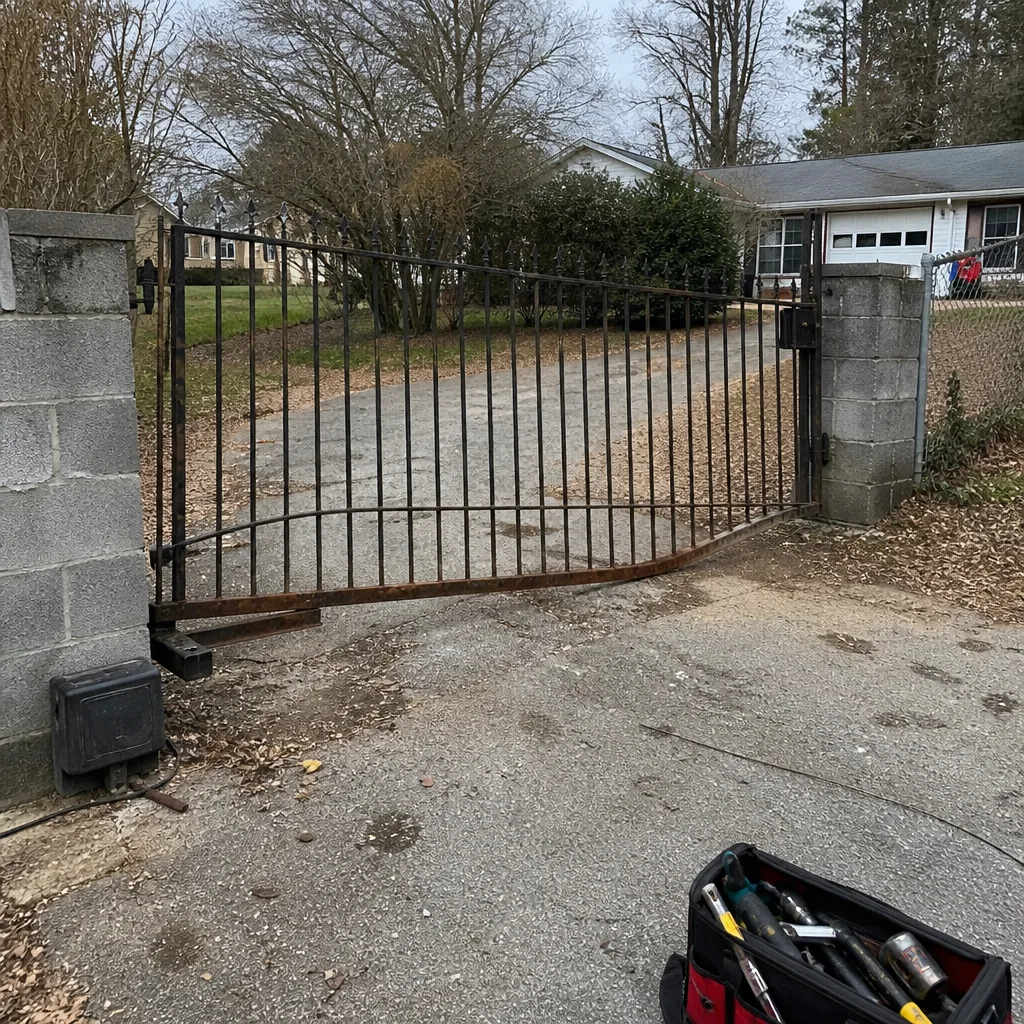 Before
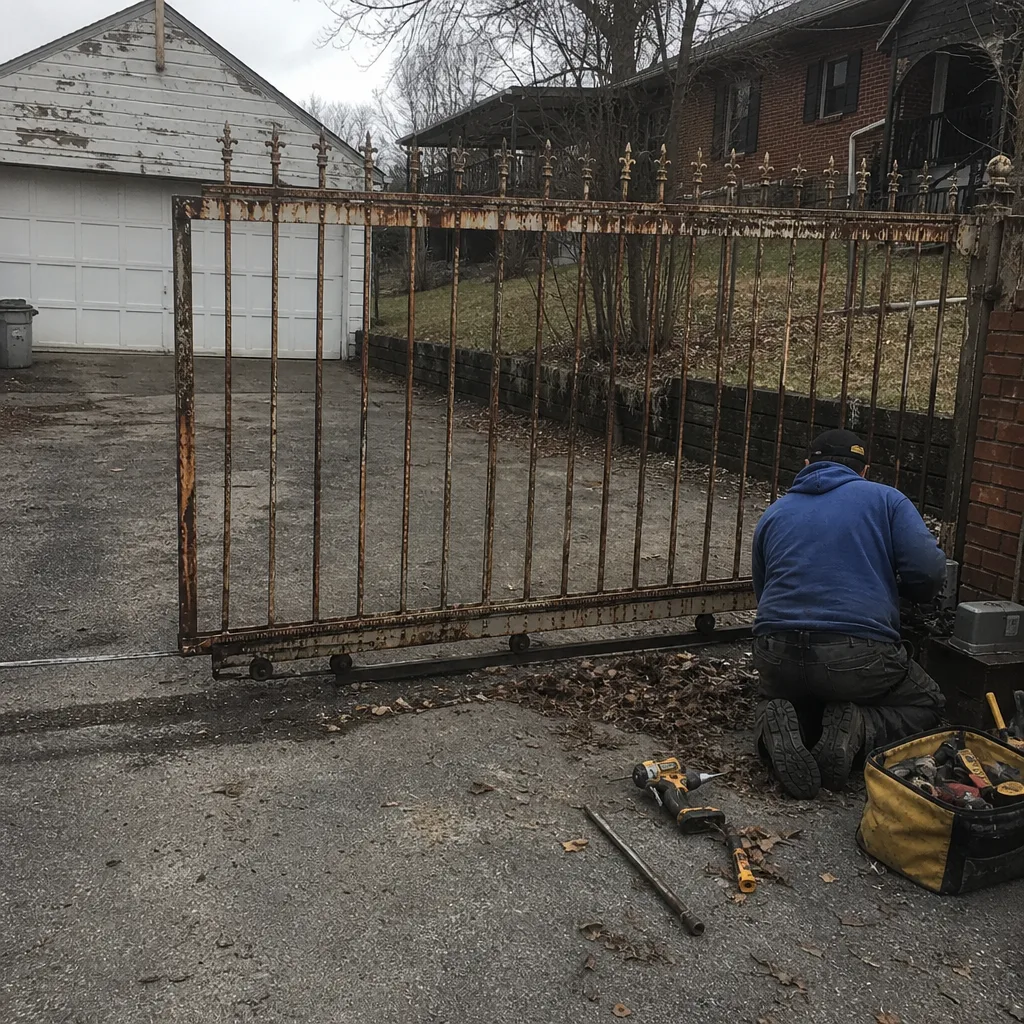
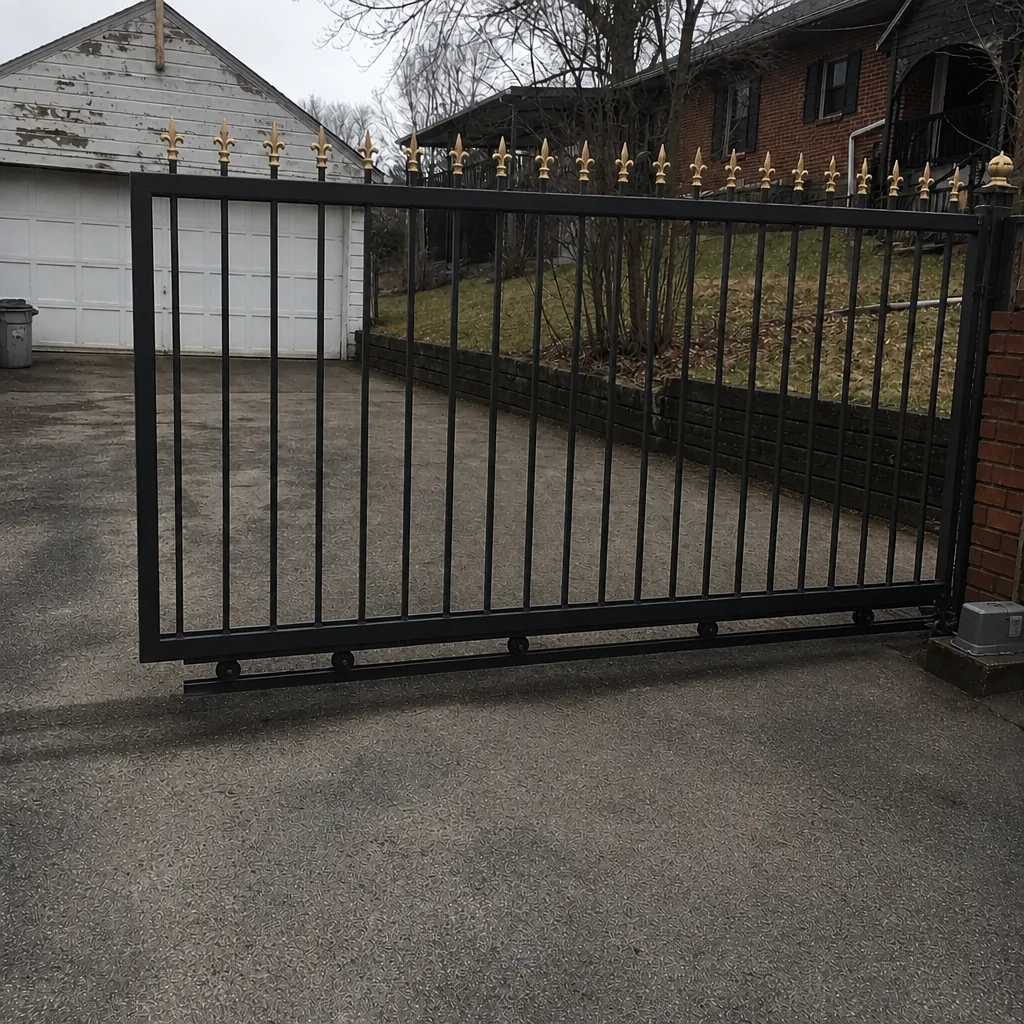
 After
 Before
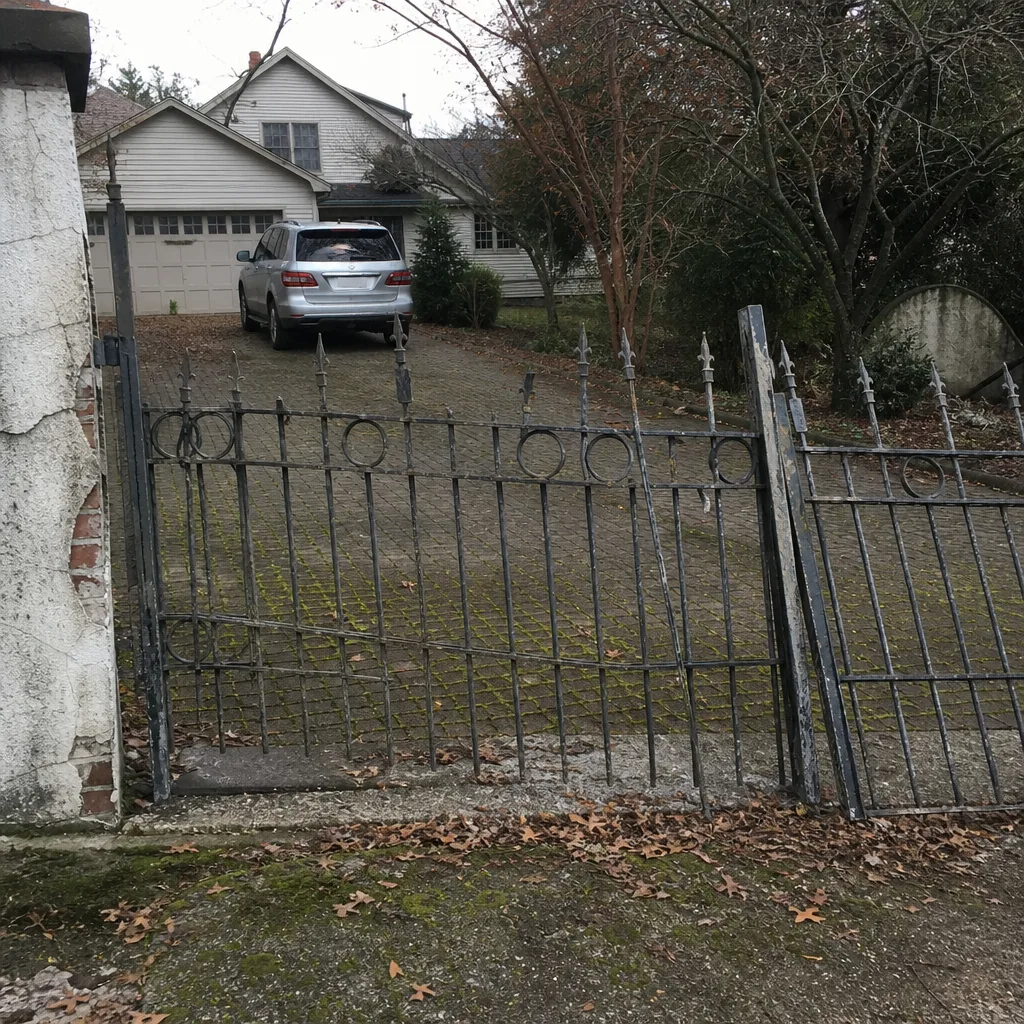
 After
 Before
 After
When to Call a Professional
Call a trained technician the moment your diagnosis points to anything electrical, anything involving a heavy panel, or anything you can’t rule out with the free checks. Specific triggers: your operator won’t power on, the breaker trips when the gate tries to move, the gate reverses or stalls without an obvious obstruction, the control board shows a fault code you can’t clear, or a slide gate has come off its track. Any of those carry real risk of injury or further damage if you keep going. Gate Repair Knoxville offers free estimates in Knoxville; call (866) 361-6964. We answer 24/7. Fast dispatch from 7am to 7pm, Sunday through Friday. Our technicians have up to 9 years of experience across residential and commercial gate systems, and we’ll tell you plainly what needs fixing and what doesn’t.
Frequently Asked Questions
Sometimes. Cleaning photo eyes, reprogramming remotes, lubricating hinges, and clearing tracks are genuinely safe DIY tasks. Anything that requires opening the operator housing, testing wiring, or replacing a control board belongs with a trained technician because of the line voltage inside the enclosure. If your diagnosis rules out the easy checks, that’s the moment to call.
Electric shock and crush injury. The operator housing holds a low-voltage control circuit inches from a 120V or 240V power feed, and separating the two requires knowledge of the system. A residential swing gate panel can weigh hundreds of pounds, and a panel that gets away from someone during a repair can cause serious injury. Those two risks are why some gate work crosses from DIY into professional territory regardless of skill.
It depends on the scope of the work. Cosmetic repairs and part replacements usually don’t require a permit, but anything that touches the electrical side may. Ask your local building department what they require for your specific project before you start. A quick call to the city settles it.
A gate stuck open is usually a photo eye problem. Dirt, misalignment, or a cut safety wire will make the operator think there’s an obstruction, so it refuses to close. Clean and realign both eyes first. If the gate still won’t close, call us and we’ll diagnose the safety circuit. We answer 24/7, and a call outside dispatch hours is booked into the next opening, Sunday through Friday, 7am to 7pm.
Entry-level residential operators are generally the friendliest. They often have a learn button, a readable fault display, and a manual written for homeowners. Dealer-grade commercial systems typically require proprietary software for anything beyond a reset, so there’s no meaningful DIY path. If you don’t know which one you have, read the label inside the operator cover and call us. We work on the systems most homeowners and property managers already have.
It depends on the failure. A gate stuck open is a security exposure, so it shouldn’t wait if you can help it. A gate stuck closed is an access problem. Cosmetic issues can usually wait. If you’re not sure, call (866) 361-6964 and we’ll tell you how urgent it is. We answer 24/7, with fast dispatch from 7am to 7pm, Sunday through Friday.
The Bottom Line
The DIY versus professional question for gate repair comes down to the component, not your skill level. Photo eyes, remotes, lubrication, and track clearing are safe to handle yourself. Anything inside the operator housing, the power feed, a heavy panel, or a slide gate off its track belongs with a technician because the risks there are electrical and physical, not just technical. If you’ve done the easy checks and the gate still won’t work, that’s the point to stop. A free estimate gives you a real diagnosis and a price before any work begins.
Call (866) 361-6964 to speak with our team. We answer 24/7. Fast dispatch from 7am to 7pm, Sunday through Friday. We work on the gate brands most homeowners and property managers already have, from residential operators to commercial access systems, and we’ll give you a free estimate before anything starts.
Written by the team at Gate Repair Knoxville.