
Last updated November 15, 2026
 Wrought iron
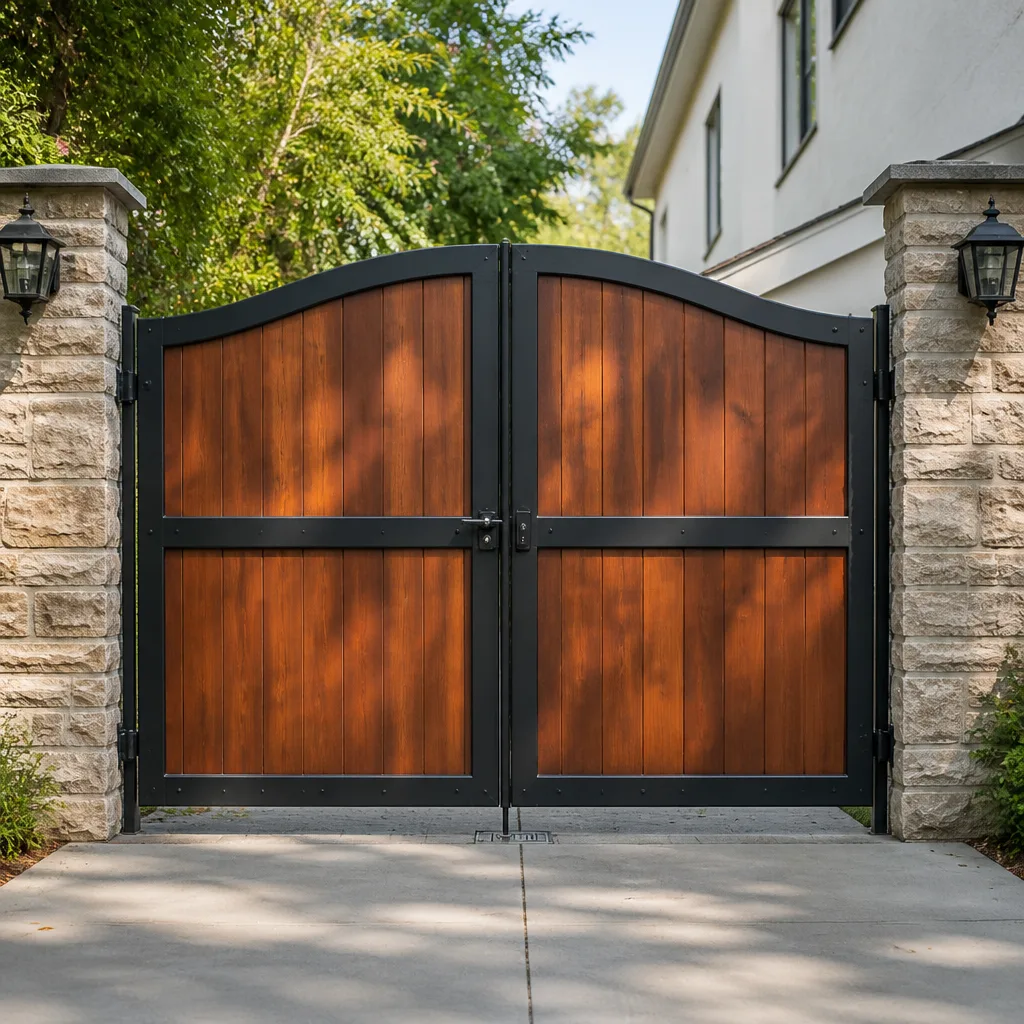 Wood & steel frame
 Farm & ranch
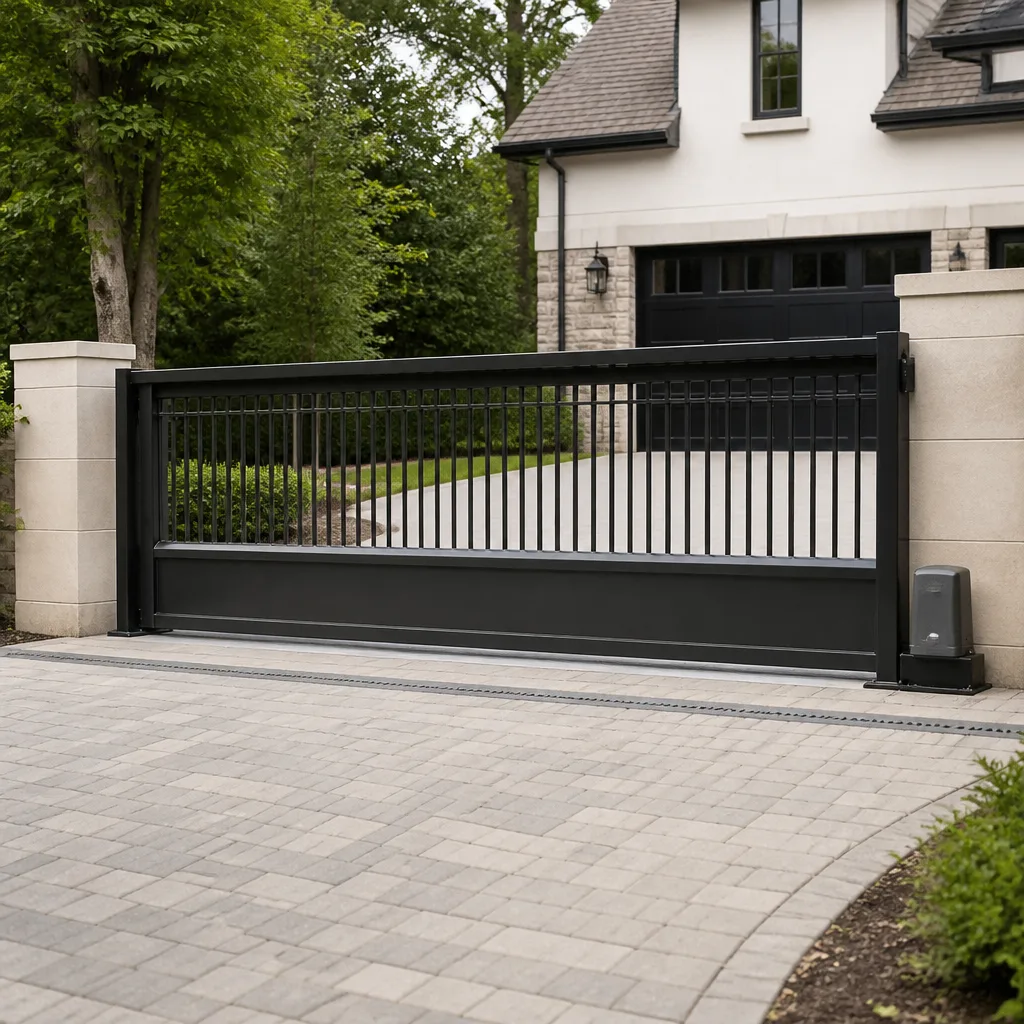 Sliding driveway gates
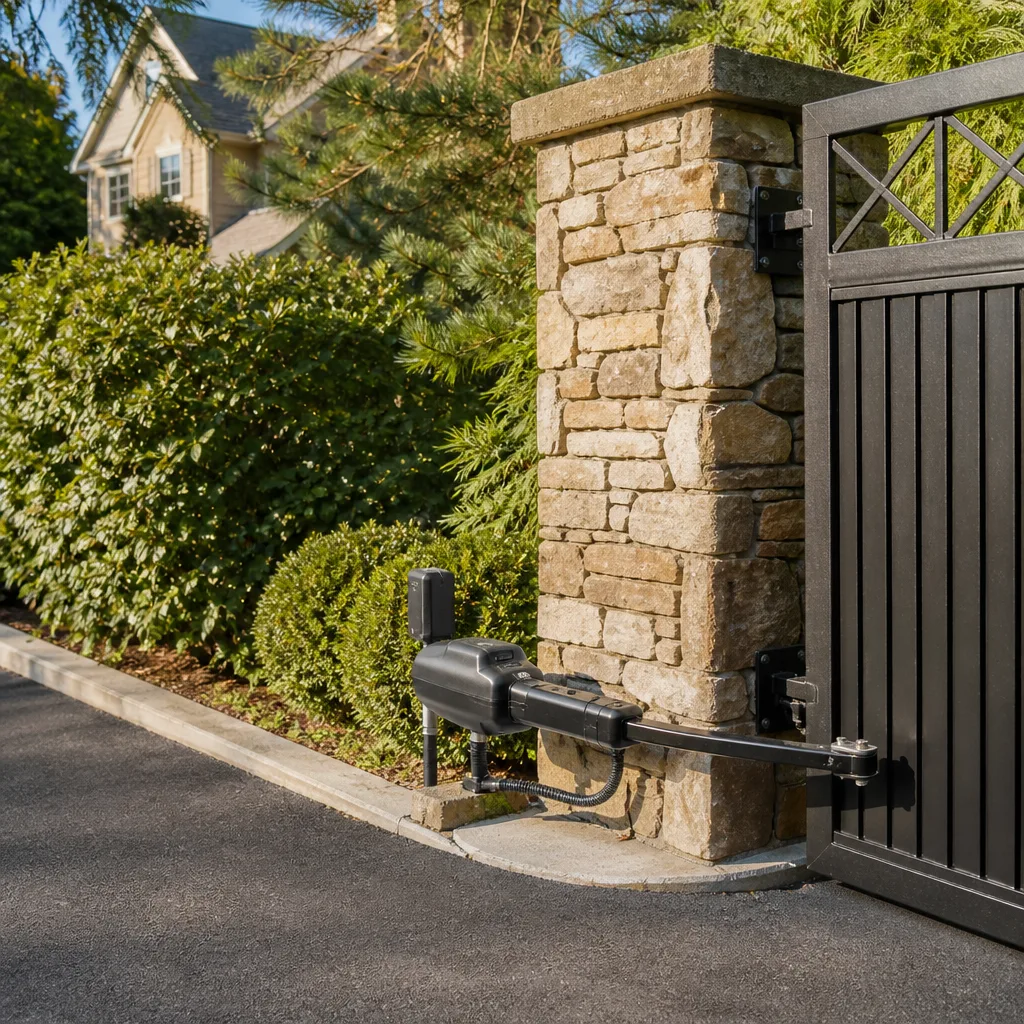 LiftMaster operators
Free on-site gate assessment - hinges, posts, and your LiftMaster or Nice gate operator checked before anything is quoted
The assessment is free and the quote is the invoice.
Get your free estimateGate Repair Maintenance Checklist for Knoxville Homeowners
The most common maintenance mistake we see on Knoxville gates isn’t skipped lubrication. It’s the wrong lubricant. WD-40 sprayed on a drive chain strips the factory grease that was already doing the work, and that chain starts wearing noticeably within about two months. A gate that gets checked twice a year with the right products outlasts one that gets “looked at” monthly with the wrong ones. This guide walks through the inspection sequence a technician follows in the field, component by component, with the lubricant specs spelled out by part type and the Knoxville timing that actually matters. Work through it and you’ll catch most failures before they leave you parked outside your own driveway.
Quick Answer
A proper gate maintenance check covers six components in a fixed order: hinges and pivot points, rollers or track, the drive chain or belt, limit switches, photo eyes, and the control board. Do it twice a year, right after the last ice storm of winter and again at the end of summer heat, and lubricate each part with the product matched to that part rather than one spray for everything. That routine catches roughly 80% of the failures that strand a gate before they happen.
Styles & brands we work with
- Wrought iron
- Wood & steel frame
- Farm & ranch
- Sliding driveway gates
- LiftMaster operators
Table of Contents
- The Inspection Sequence a Technician Follows
- Lubricant Specifications by Component
- How to Test Photo Eye Alignment Without Tools
- Knoxville Maintenance Timing: Ice Storms and Summer Heat
- Swing Gates vs. Slide Gates: What Fails Differently
- Brand-Specific Details for Viking, Ghost Controls, DoorKing and Elite
- The Five Things to Document After Every Check
- Common Mistakes to Avoid
The Inspection Sequence a Technician Follows
Order matters. A technician works from the gate leaf inward toward the control board because a mechanical bind downstream will make a perfectly healthy operator look broken. If you check the electronics first, you’ll chase symptoms instead of causes. Here’s the sequence we use on every gate repair visit in Knoxville, and it’s the same order you can follow at home.
- Hinges and pivot points. Open the gate by hand, all the way, and listen. Any squeal, grinding, or point where resistance jumps tells you the hinge is dry or the pivot has worn. On swing gates this is the single most overlooked component, and a dry hinge puts load straight onto the operator arm.
- Rollers and track. On slide gates, roll the gate manually through its full travel. Worn rollers will feel like a bump or a hitch. Check that the track is clear of grit, leaves, and anything the gate has dragged in.
- Drive chain or belt. Look for slack, rust, and dry links. A chain should have slight play and an even coat of grease. A belt should show no glazing or fraying on the edges.
- Limit switches. These tell the operator when to stop. Watch where the gate actually halts against where it should. If it stops short or over-travels and hits the physical stop, the limit is out of adjustment. Continued over-travel damages the operator’s internal gearing.
- Photo eyes and safety edges. Test these before anything else electrical. A gate that closes on a vehicle because a safety device failed is a serious problem, and it’s a common one after a season of temperature swings.
- Control board. Last. Look for moisture, insect nests, corrosion at terminals, and any error indicator the board displays. By the time you’re here, everything mechanical and safety-related should already be ruled out.
Running the sequence in this order on a Knoxville gate takes about twenty minutes for a homeowner who knows what to feel for. Reversed, it can take an hour and still point you at the wrong part.
Lubricant Specifications by Component
One can does not do the whole gate. Each component carries a different load and moves at a different speed, and the product has to match. Here’s the mapping, with actual product types rather than vague categories.
- Drive chain: chain and cable lubricant in a spray can, ideally one that sets to a waxy film rather than running off. White lithium grease in aerosol form is a reasonable second choice. Never use plain WD-40 or silicone spray here. Neither one leaves a load-bearing film, and both cut through the grease already on the chain.
- Hinges and pivot pins: a penetrating lubricant worked in first to clear old grit, then a heavier grease to stay. Lithium grease or a dedicated hinge grease holds up through Knoxville’s wet spring better than a light oil that washes away.
- Slide gate rollers and track: dry graphite or a dry PTFE spray. Wet lubricants on a track collect grit and turn into an abrasive paste, which wears rollers faster than running them dry.
- Rack and pinion (on rack-driven slide gates): open-gear lubricant or a spray grease that clings to the teeth. Apply it to the rack, not the pinion gear, so the mesh spreads it as the gate travels.
- Operator gearbox: this is sealed. If a gearbox is leaking, that’s a repair call, not a lubrication task. Adding oil to a sealed residential operator usually makes the problem worse.
- Limit switch mechanisms: leave them alone. A dry limit switch works fine. Lubricating one can attract grit into the contacts and cause intermittent stopping.
The counterintuitive part is that less is more. A thick coat of grease on a chain attracts dust and grit, and grit is what actually grinds a chain down. A thin, even film that fills the gaps between links is the target. If you can see globs of product sitting on the outside of the chain, you’ve applied too much.
What about rust converters and penetrating oils?
Penetrating oil is a tool for freeing a stuck part, not a maintenance product. Use it to loosen a seized hinge, work the hinge until it moves freely, clean it out, then apply the correct grease. Leaving a gate lubed only with penetrating oil means it’ll be dry again within weeks. On Knoxville gates that sit under heavy tree cover, a light surface rust on a chain isn’t a crisis; clean it, grease it, and it’ll run. Heavy pitting or stiff links that won’t free up mean the chain is overdue for replacement.
How to Test Photo Eye Alignment Without Tools
Photo eyes, also called safety beams or loop detectors on some commercial systems, are the pair of small sensors mounted on either side of the gate opening. They exist to stop the gate from closing on a person or a vehicle. When they’re misaligned, most operators won’t close the gate at all, which is the safest failure mode but also the one that leaves you with a gate stuck open.
You can test them with nothing but your hand and your eyes.
- Stand in a position where you can see both sensors, one on each post or column.
- Look at the indicator light on each unit. Most brands use an LED that stays solid when the beam is received and blinks or goes dark when it isn’t. On Viking and Ghost Controls units the indicator behavior differs slightly, so check your operator manual once to know what “good” looks like on your specific unit.
- Pass your hand slowly through the beam path at mid-height. A working pair will trip and the indicator on at least one unit will change state.
- Now the alignment check: look at the small lens on each eye. If either one has a visible smudge, spider web, or a film of pollen, clean it with a dry cloth and re-test. This alone fixes a surprising number of “failed” photo eyes.
- If the beam is still broken after cleaning, check that neither sensor has been knocked out of aim. Most models have a small adjustment screw or a swivel mount. Loosen, aim the transmitter directly at the receiver lens, and watch for the indicator to go solid before you tighten it back down.
What a pass actually looks like: both indicators in their “clear” state with nothing in the path, a clean trip when you break the beam, and the gate reversing or refusing to close within a fraction of a second of the beam being broken. If the gate hesitates or keeps closing for even half a second after your hand passes through, the safety circuit needs attention before the gate is used again. That’s not a maintenance item, that’s a repair.
On some larger commercial systems, a vehicle loop detector serves the same safety role as photo eyes, sensing a car in the ground loop rather than a beam across the opening. Loop problems usually show up as a gate that closes on a vehicle still partly in the opening, and the diagnosis is different from a photo eye issue. If your gate uses loops, a technician visit is the right call.
Knoxville Maintenance Timing: Ice Storms and Summer Heat
Calendar-quarter maintenance schedules make sense for a climate that changes gradually. Knoxville doesn’t do that. The two events that stress a gate hardest here are a hard freeze followed by ice, and the long humid stretch of summer heat. That’s why we recommend two checks a year timed to the weather rather than to the calendar.
After the last ice storm, before spring
Freezing rain and ice load up every moving part on a gate. Chains stiffen, hinges swell with ice, and operators that were adjusted perfectly in October are now fighting a gate that’s heavier and stiffer than they were built for. The freeze-thaw cycle also shifts post footings slightly, which on a slide gate means the track and the rollers can fall out of alignment by a small but meaningful amount. After a hard ice event, walk the gate manually, check the chain tension, look for any post movement, and test the photo eyes. Catching a slightly misaligned track now is far cheaper than replacing rollers in June.
At the end of summer heat
Heat does its own damage. Grease thins and weeps off chains and hinges, the belt on a belt-driven operator can glaze and slip, and control boards in an outdoor housing bake inside a metal enclosure that’s been in direct sun all afternoon. The late-summer check is about lubrication first, then a careful look at the operator housing for signs of heat stress. Any darkening or discoloration on the board itself, or any intermittent behavior on hot afternoons, is a signal to have the electronics inspected.
What about the rest of the year?
Between those two visits, watch for three things: a change in how the gate sounds, a change in how it moves, and any hesitation at either end of travel. Those three observations catch most issues between scheduled checks. Knoxville’s wet spring adds one more item to the routine: after a long stretch of rain, check the ground around slide gate tracks and swing gate hinge posts for standing water or soft ground that could let a post shift.
Swing Gates vs. Slide Gates: What Fails Differently
Both gate types share the operator, control board, and safety devices, but the mechanical failures live in different places. Knowing which type you have is the starting point for any maintenance routine, and it changes what a Knoxville homeowner should watch for.
Swing gates pivot on hinges. The failures cluster around the hinge points and the operator arm. A dry hinge or a worn pivot bushing puts load onto the operator, which eventually shows up as the gate dragging, straining, or the operator stalling mid-swing. Wind load matters more on a swing gate than a slide gate because the full leaf acts as a sail, and Knoxville’s storm season works those hinges harder than a still climate would. On a swing gate, check hinges first, every time.
Slide gates run on rollers along a track or on a cantilever frame. Here the failures cluster around track alignment, roller wear, and the drive mechanism. A slide gate track that’s slightly out of level, or rollers that have flat-spotted, will cause the gate to bind. A binding slide gate is dangerous for one specific reason: a gate that comes off its track or hangs up on one side is a heavy metal panel that can fall or swing free. When a slide gate binds, stop using it until the cause is identified.
- Operator wiring and power: on both gate types, the operator wiring and power connection are the genuinely dangerous parts. Never open an operator housing or probe wiring yourself. That work belongs to a trained technician.
- Heavy gate panels: a gate leaf of any real size carries serious weight. If a gate is sagging on its hinges or hanging up on one roller, don’t force it open and closed while you diagnose, because a panel that drops or swings unexpectedly can crush a hand or a foot.
- Battery backup: if your operator has a battery backup, check that it’s still holding a charge on your twice-yearly routine. A dead battery turns a short power outage into a gate you can’t open.
Brand-Specific Details for Viking, Ghost Controls, DoorKing and Elite
Each operator platform has a personality, and knowing yours makes maintenance faster and diagnostics cheaper. We work across electric gate repair on all the major residential and commercial platforms, so we’re not pushing one brand over another when we recommend a fix.
Viking. Viking operators are common on residential swing gates, and the limit switch adjustments on some Viking models are more sensitive to temperature than comparable operators. A gate that stops slightly short on a cold morning and behaves normally by noon is often a limit adjustment issue showing up as the metal contracts. Worth noting in your maintenance log if it happens. If it repeats through a season, it’s worth having checked.
Ghost Controls. A popular DIY-adjacent residential platform, and its control board layout is simpler than a commercial unit’s, which means a homeowner can usually read the status indicators and the manual without much trouble. On Ghost Controls units, photo eye alignment tends to be the most common failure after a season of settling, and it’s usually a cleaning and an aim rather than a replacement.
DoorKing. DoorKing is a commercial-grade platform, and its loop detectors are often the part that needs attention on multi-access properties. If a DoorKing gate is behaving unexpectedly around vehicles, the loop rather than the operator is often the cause. On a commercial property in Knoxville with any vehicle traffic, an annual technician inspection pays for itself in avoided access lockouts.
Elite. Elite operators tend to be straightforward mechanically, and they’re a good illustration of why brand-agnostic maintenance matters. On an Elite unit, a symptom that looks like a board failure is often a limit switch or a safety device, and a single-brand dealer might jump straight to a board replacement. We don’t. Diagnostics follow the symptom.
The common thread is that all four platforms benefit from the same inspection sequence. The details change, the order doesn’t.
The Five Things to Document After Every Check
Documentation is the least glamorous part of gate maintenance and the one that saves the most money later. A gate with no maintenance history makes every future repair a discovery project. A gate with a written log lets a technician arrive already knowing what was adjusted, when, and how the gate behaved before. Here’s what to write down.
- Photo eye status. Note the indicator state on both eyes and whether you broke the beam during the test. If either indicator was intermittent, note the conditions. This is the single most useful line for diagnosing a future “gate won’t close” call.
- Chain or belt condition and tension. “Chain tight, no slack” or “chain had 1 inch of slack, adjusted to manufacturer spec” tells a technician what you already know and where the adjustment history lives.
- Hinge and roller condition. Note any noise, drag, or free play. A hinge that had slight play in May and no play in November is a maintenance issue. A hinge that had slight play in May and significant play in November is a repair in progress.
- Any adjustment made. Whatever you touched, write it down. Chains, limits, photo eyes, and track alignment all count. The next person to look at the gate needs to know what already changed.
- Date and any weather event since the last check. Ice storms, storm-season wind, and long wet stretches all affect the gate, and having the date next to the observation makes patterns obvious. A gate that needs adjustment after every ice event needs a footing inspection, not another adjustment.
Keep the log inside the operator housing lid, or in a waterproof pouch zip-tied to the inside of the gate frame if you’d rather not open the housing. A year of notes turns a fifty-dollar adjustment into a two-minute conversation the next time something goes wrong.
Common Mistakes to Avoid
- Using WD-40 on the chain. It’s a light solvent and penetrating oil, not a load-bearing lubricant. It cuts through the grease already on the chain, and the chain starts wearing within weeks. A proper chain and cable lubricant does what WD-40 doesn’t.
- Greasing the track. A wet lubricant on a slide gate track collects grit from the driveway and turns into an abrasive paste. Use dry graphite or PTFE on anything that runs on a track, and keep grease for hinges, chains, and racks.
- Skipping the photo eye cleaning. Spider webs, pollen, and dust blobs on the lens are the most common cause of a gate that refuses to close, and they’re the cheapest thing on the whole gate to fix. Check the lenses every time.
- Waiting for calendar quarters in Knoxville. A gate inspected in March for ice damage and in September for heat damage catches roughly what a quarterly generic check catches, for half the work. Knoxville weather is a better maintenance calendar than the calendar itself.
- Forcing a binding gate. A slide gate that binds, or a swing gate that drags, doesn’t fix itself by cycling it repeatedly. Forcing a heavy gate through a bind is how hinges crack, rollers break, and panels come off the track.
- Opening the operator housing. The housing is there for a reason. The wiring and power inside are the dangerous parts of a gate system, and no homeowner repair is worth the risk. Inspect from the outside; hand the inside to a technician.
- Treating a limit switch adjustment like a board replacement. A gate that over-travels or stops short is usually a limit switch out of adjustment. Single-brand dealers sometimes skip straight to a control board replacement. Diagnostics should follow the actual symptom, not what’s easiest to sell.
See the difference
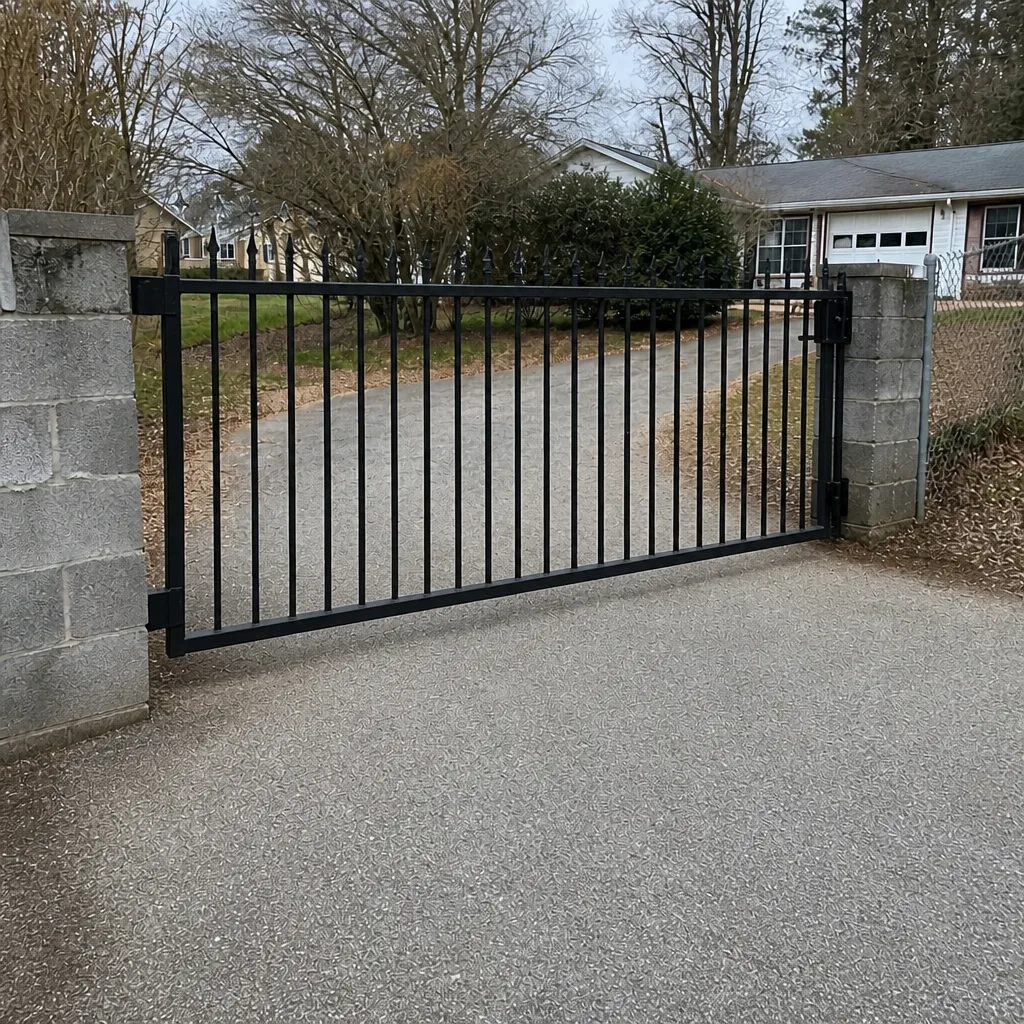
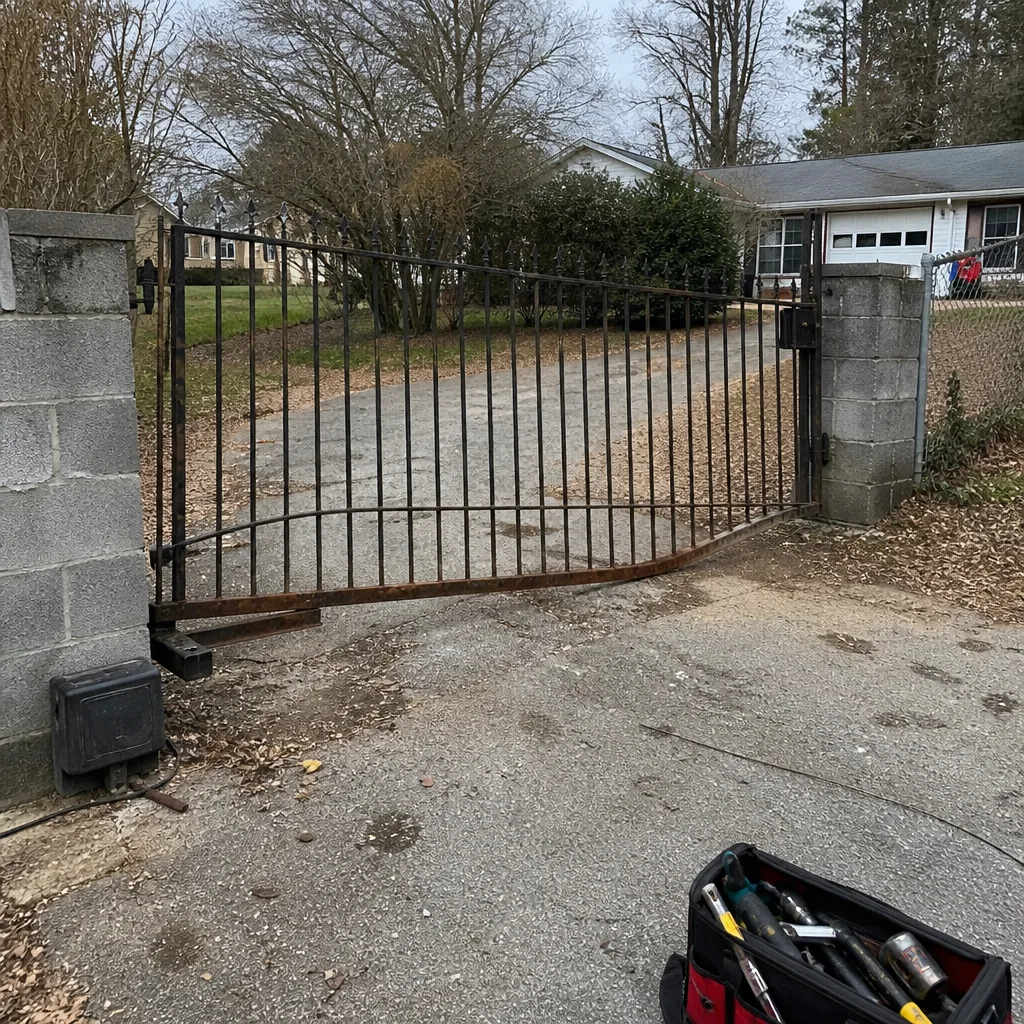 Before
 After
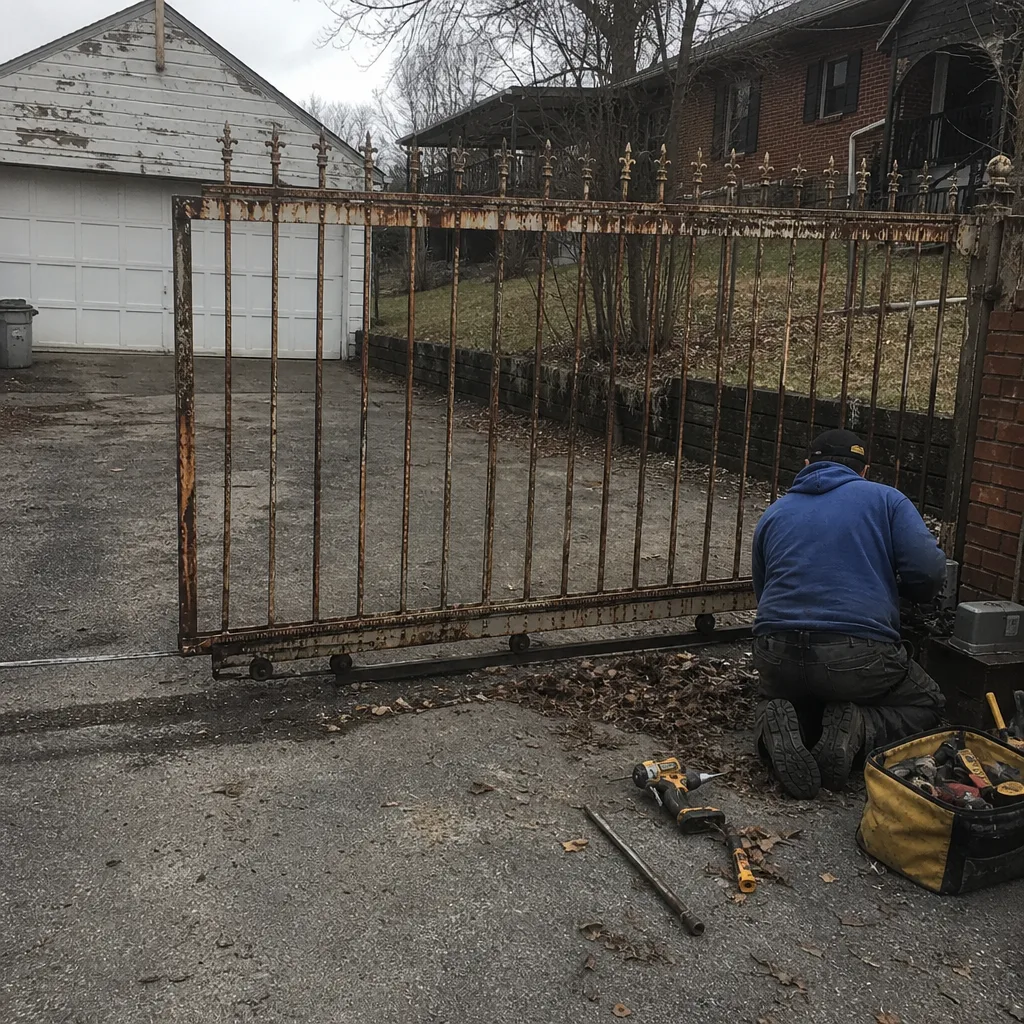 Before
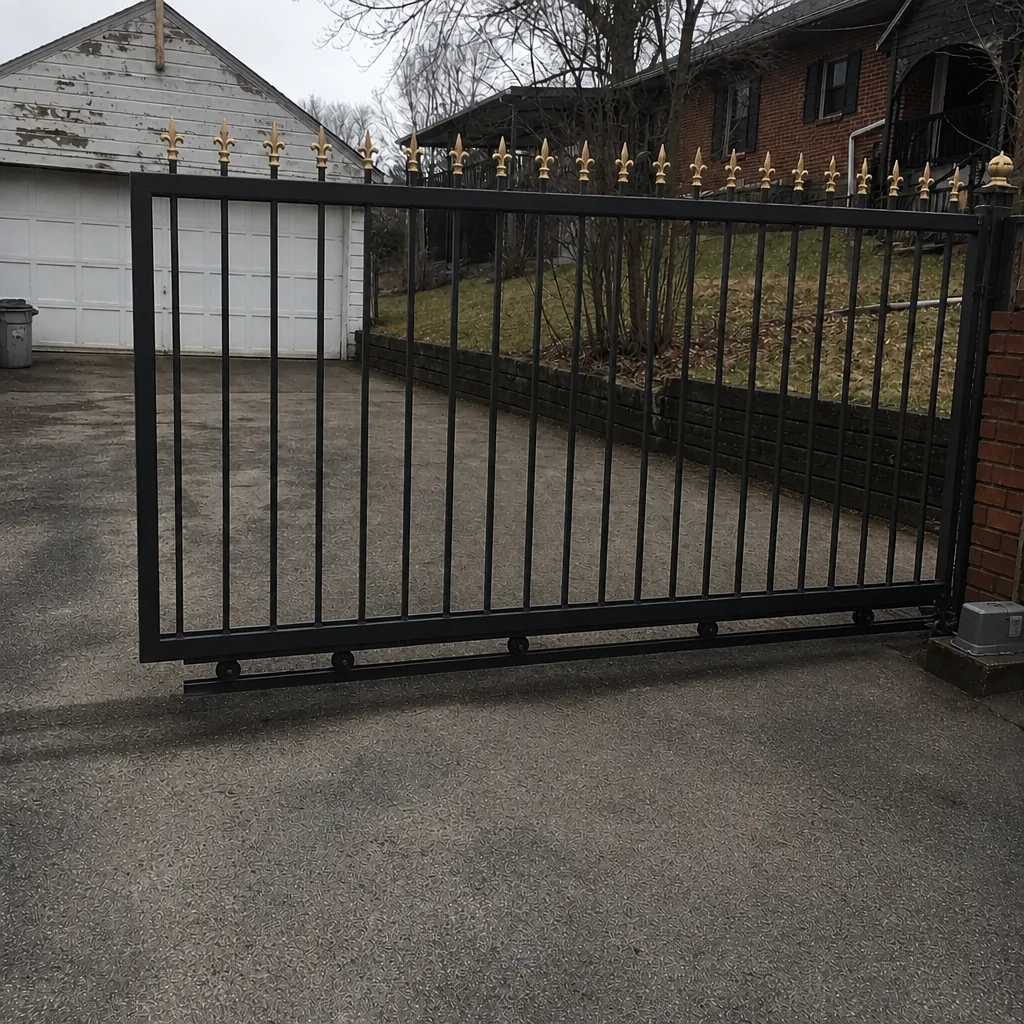 After
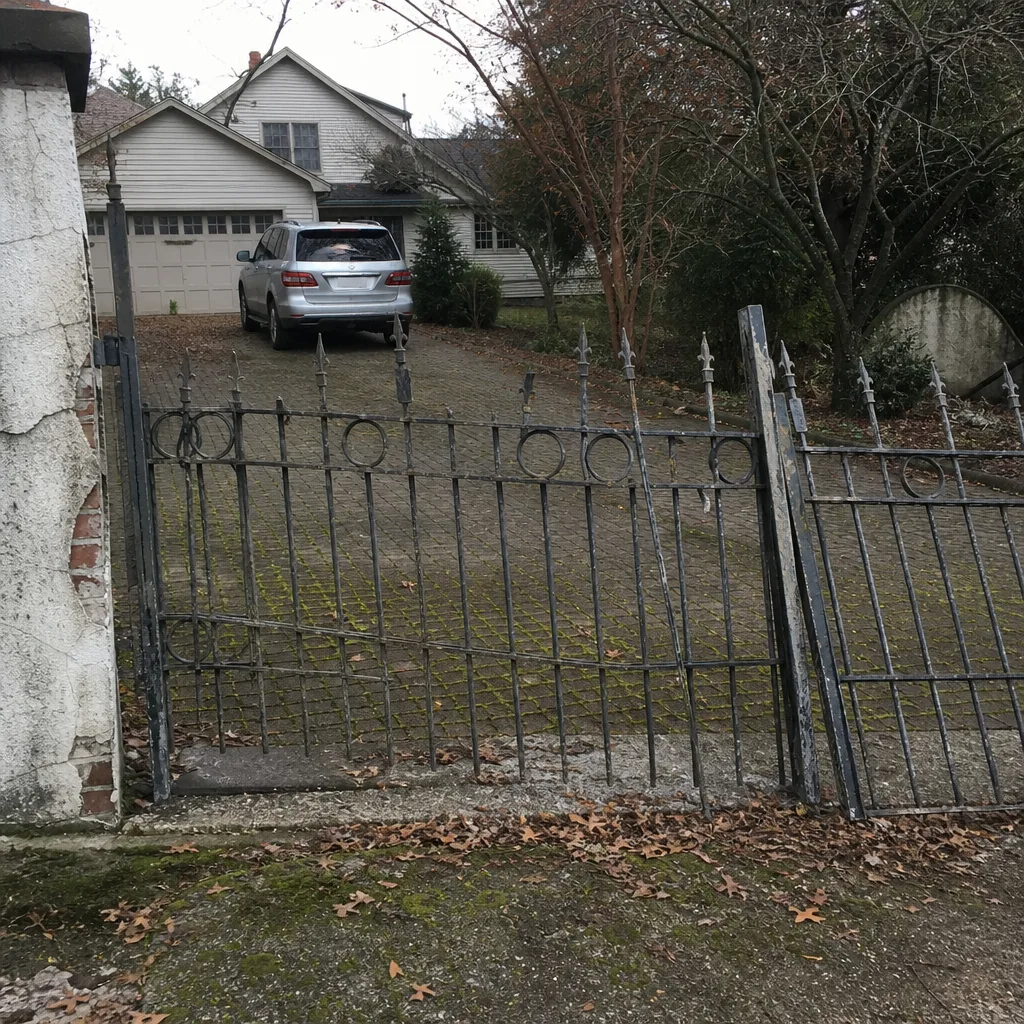 Before
 After
When to Call a Professional
Some things a homeowner can check, and some things belong to a technician. Call us when a gate binds, drags, or comes off its track, because a heavy panel out of alignment is a genuine hazard. Call when a photo eye or safety edge fails to reverse a closing gate, because a gate that closes on a vehicle or a person isn’t a maintenance issue. Call when the operator itself is beeping, showing an error, or refusing to run, because operator wiring and control-board work are technician territory. Call after any significant ice event or storm that moved a post, and call when a gate has been used hard for years without a proper inspection. We can also handle a full gate installation if a system has reached the end of its useful life, which keeps the same provider across the gate’s lifespan rather than handing you off to a second contractor.
Gate Repair Knoxville offers free estimates in Knoxville. Call (866) 361-6964. We answer 24/7. Fast dispatch from 7am to 7pm, Sunday through Friday. Our technicians have up to 9 years of experience, and we work across LiftMaster, FAAC, BFT, Linear, Viking, Ghost Controls, DoorKing, Elite, and Mighty Mule. We’re licensed and insured, and every price is quoted and agreed before any work starts.
Frequently Asked Questions
Twice a year, timed to the weather rather than to calendar quarters: once after the last ice storm of winter and once at the end of the summer heat. That schedule catches ice damage and heat-related wear at the two points Knoxville’s climate stresses a gate most. If your gate is under heavy tree cover or handles constant vehicle traffic, three checks a year is fair.
No. WD-40 strips the grease already on the chain and doesn’t leave a load-bearing film behind, so the chain starts wearing within about two months. Use a dedicated chain and cable lubricant or a white lithium grease in aerosol form. Spray a thin, even film so it fills the gaps between links rather than sitting in globs on top.
A gate that stops closing is usually a photo eye issue: a dirty lens, a knocked aim, or a loose mount. Clean both lenses with a dry cloth, check that both indicator lights are in their clear state, and break the beam with your hand to test it. If the gate still won’t close, that’s a safety device failure and a technician should look at it before the gate is used again. Call (866) 361-6964 for a free estimate.
A swing gate pivots on hinges and swings open, like a door. A slide gate rolls sideways along a track or a cantilever frame. The operator type, the maintenance priorities, and the failure patterns are different, so it’s worth knowing which one you have before you start checking anything. If you’re not sure, we can tell you from a description or a photo.
Yes. We work on all four, along with LiftMaster, FAAC, BFT, Linear, and Mighty Mule. Because we’re brand-agnostic, our recommendations follow the actual symptom rather than the brand we happen to stock, which means a limit switch adjustment stays an adjustment rather than a board replacement. Older gates from any of these platforms are welcome too.
The photo eye status on both sensors, and any adjustment you made. Photo eye readings are the fastest way to diagnose a future “gate won’t close” problem, and the adjustment log tells a technician what already changed. Add chain tension, hinge condition, and the date to complete the record. The log itself costs nothing and saves real time on every repair.
Our ice and summer heat cycle is hard on gates, but proper timing handles most of it. The freezing and thawing of a wet Knoxville spring can shift footings slightly, and the August heat bakes an outdoor control board housing. A gate checked after the ice and after the heat, with the right lubricants, generally holds up as long as a gate in a milder climate. A gate left unchecked through both will run into trouble sooner.
The Bottom Line
Gate maintenance in Knoxville is a sequencing problem, not a product problem. Follow the six-component inspection order, use the correct lubricant for each part, check the photo eyes at every visit, and time your two annual checks to the ice and the summer heat rather than to calendar quarters. Document what you found and what you changed. That routine catches the great majority of failures before they leave a gate stuck open or stuck closed. For anything mechanical, electrical, or safety related, call in a technician. Reach out through Knoxville and we’ll be there. Everything starts with gate repair in Knoxville, and everything ends with a gate that works.
Call (866) 361-6964 for a free estimate. We answer 24/7. Fast dispatch from 7am to 7pm, Sunday through Friday.
Written by the team at Gate Repair Knoxville.