
Last updated November 15, 2026
 Wrought iron
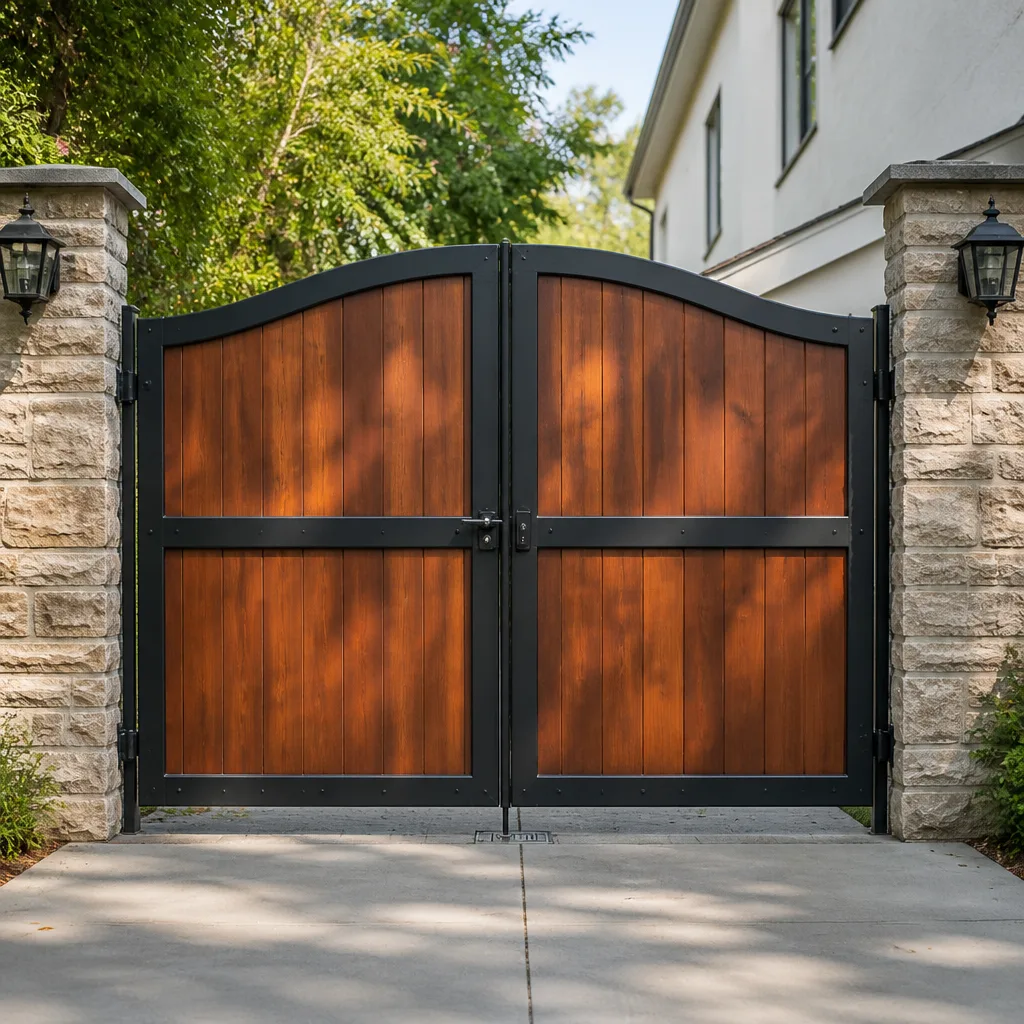 Wood & steel frame
 Farm & ranch
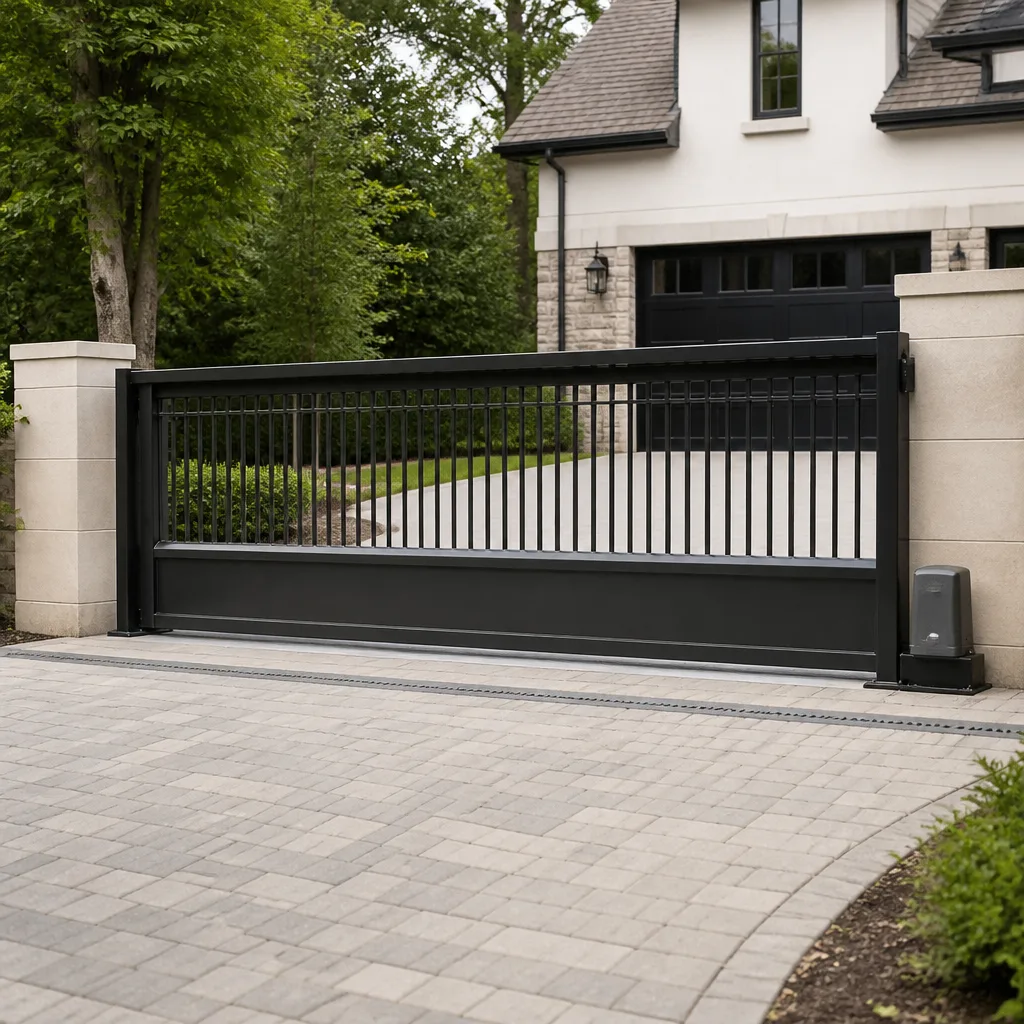 Sliding driveway gates
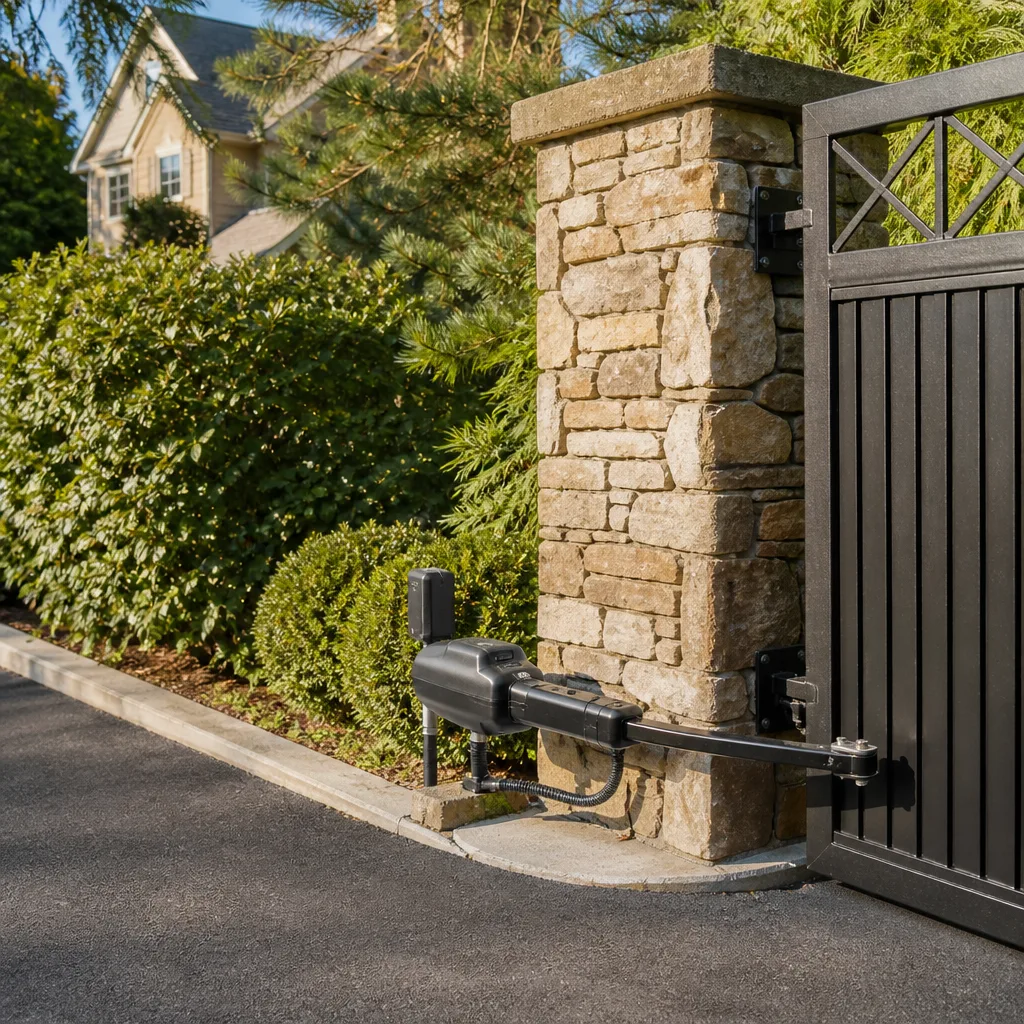 LiftMaster operators
Free on-site gate assessment - hinges, posts, and your LiftMaster or Nice gate operator checked before anything is quoted
The assessment is free and the quote is the invoice.
Get your free estimateGate Repair Warning Signs: A Knoxville Homeowner’s Reference Guide
A gate that hesitates for two seconds before it opens isn’t just “slow.” That pause is often a control board buying time to compensate for low voltage, which usually traces back to a battery losing its charge or a corroded connection at the terminals. Left alone, that small delay tends to grow into a gate that won’t move at all. Most gate failures in Knoxville announce themselves well before the gate stops working, but only if you know what to listen and look for. This guide breaks down the sounds, behaviors, and structural clues that point to a specific failing component, and gives you a short self-test you can run in about ten minutes before you call anyone.
Quick Answer
The main warning signs of a failing gate are grinding or clicking noises, pauses or hesitation before movement, inconsistent response to remotes, partial travel or reversal mid-cycle, rust patterns that show active water intrusion, sagging hinges, and worn rollers. Intermittent symptoms are usually more urgent than steady ones because they point to an electrical fault that’s hard to trace once it spreads. A slow, grinding, or hesitant gate in Knoxville should be diagnosed early, while the repair is still a component fix rather than a full operator replacement.
Styles & brands we work with
- Wrought iron
- Wood & steel frame
- Farm & ranch
- Sliding driveway gates
- LiftMaster operators
Table of Contents
- What Your Gate’s Sounds Are Telling You
- Behavioral Signs of an Operator in Trouble
- Visual Warning Signs on the Gate Itself
- Why Intermittent Problems Are More Urgent Than Consistent Ones
- Your Ten-Minute Self-Test Before a Technician Arrives
- How Knoxville’s Climate Affects Gate Hardware
- Matching Warning Signs to Your Gate’s Brand
- Repair or Replace? How to Decide
What Your Gate’s Sounds Are Telling You
Gate noises are diagnostic. The type of sound a gate makes maps fairly closely to the part that’s wearing out, and a trained ear can narrow a fault down before anyone opens a control box. When you describe a noise to us, we’re listening for three main categories, and each one points in a different direction.
- Grinding: Usually a gear or rack problem. On a slide gate, worn rack teeth or a failing gearbox in the operator produce a steady, low grind. On a swing gate, the source is often the hinges or the operator arm trying to push past resistance. Grinding that gets worse under load or in cold weather is a strong sign of mechanical wear.
- Clicking: Often a limit switch or a relay that’s struggling to engage. A single click at the start of a cycle can be normal, but clicking that repeats, or a click followed by nothing happening, points to a switch that’s failing to signal the board.
- Humming with no movement: Frequently a capacitor or motor fault. The motor is receiving power but can’t generate the torque to move the gate. A weak run capacitor on a swing gate operator is a common culprit, and continuing to cycle a humming gate can burn out the motor.
One thing to note: the sound alone isn’t a diagnosis. A grind on a slide gate can also come from a bent track or a roller that’s seized, and a hum can come from a jammed mechanism as easily as a bad capacitor. That’s why a proper inspection combines the sound with a visual check of the mechanism. If you’re hearing any of these patterns, it’s worth getting ahead of them with gate repair rather than waiting for the gate to stop mid-cycle.
Behavioral Signs of an Operator in Trouble
Behavior problems are often easier for a homeowner to spot than sounds, because you see them every day. A gate that opens fine one morning and struggles the next is showing you a pattern, not just a bad day. The behaviors below are the ones we watch for most closely, because each one points to a specific part of the control system or operator.
- Inconsistent remote response: If you sometimes have to press the remote twice, or it works from close range but not from the driveway, the receiver, the antenna, or the battery in the remote itself may be failing. Rule out the remote first by trying a second one.
- Partial travel: A gate that stops halfway or reverses partway through a cycle usually has a limit switch or encoder problem. The board has lost track of where the gate is in its travel.
- Reversal mid-cycle: If the gate starts to close and then reverses without hitting anything, a safety sensor, loop detector, or the board’s obstruction logic is triggering. This is one of the few symptoms that can indicate a genuine safety failure, since the gate’s safety system is what stops it from reversing into a vehicle.
- Hesitation before movement: That two-second pause at the start of every cycle often means the control board is waiting for voltage to stabilize. It’s a strong early clue of battery or connection trouble.
These are the patterns that make the difference between a quick fix and a stranded driveway. If you spot two or more of them together, or if they’re getting more frequent, an electric diagnosis is the right next step. Our electric gate repair work covers operators, control boards, sensors, and wiring, so the electrical side gets checked alongside the mechanical side.
Visual Warning Signs on the Gate Itself
Walk out and look at your gate, not just the operator. The metal and hardware carry a record of what’s been happening to the system, and some of those clues are visible without any tools. The three most useful visual checks are rust patterns, hinge geometry, and roller wear.
Rust patterns. Surface oxidation is a light, even orange film that wipes off and doesn’t spread. Active water intrusion looks different: it often shows as rust streaks or concentrated corrosion at a joint, weld, or fastener, with paint lifting or bubbling nearby. Rust at a joint usually means water is getting in there, and if the joint is a moving part like a hinge or roller shaft, water is also accelerating the wear.
Hinge gaps. On a swing gate, look at the gap between the gate panel and the post. A gap that’s wider at the top than the bottom means the gate has sagged, and the hinge is working against the operator. A sagging gate forces the operator to push harder, which shortens the life of the motor and the hinge pins.
Roller and track wear on a slide gate. Rollers should be round and turn freely. Flat spots, a visible groove, or rollers that don’t rotate point to a worn wheel that’s dragging. Scored tracks and loose guide rollers can also cause the gate to bind, which loads up the operator and can eventually derail the gate.
If you’re in an older Knoxville neighborhood where gates sit under mature trees, look at the track or the ground beneath a slide gate. Piles of leaves and debris holding moisture against the track are a common source of premature wear. Clearing them is one of the few maintenance tasks you can safely do yourself.
Why Intermittent Problems Are More Urgent Than Consistent Ones
Here’s a counterintuitive rule we’d want any gate owner to know. A gate that consistently fails in the same way is usually easier to fix than a gate that fails at random. The reason is electrical. A steady fault shows up every time you test it, so a technician can trace it right away. A random fault is a marginal condition, and marginal conditions are where small problems become expensive ones.
Consider the hesitating gate from the opening. If the board is compensating for low voltage, the voltage drop is usually caused by a battery that’s past its useful life, a loose terminal, or a corroded connection. At first it’s a slight delay. Then it starts failing on cold mornings when the battery has less capacity. Then it fails when the gate has done more cycles than usual. The gate rarely tells you which condition triggered a given failure, so by the time the problem shows up consistently, the fault may have spread to the board or the motor.
The practical takeaway is: treat intermittent symptoms as a prompt to diagnose, not a reason to wait. This is especially true in Knoxville, where the temperature swings between seasons can stress batteries and connections, making marginal faults show up as intermittent ones. A random-acting gate is the hardest fault to chase down after the fact, and it’s usually the cheapest one to catch early.
Your Ten-Minute Self-Test Before a Technician Arrives
You don’t need to open a control box to give a technician useful information. These five checks take about ten minutes, and they shorten the diagnosis before anyone arrives. Do them only from the outside of the gate, standing clear of moving parts.
- Test the remote from several distances. Try it from close range, from the end of the driveway, and from inside the house. A remote that works only up close points to an antenna or receiver issue. Try a second remote if you have one.
- Watch a full cycle. Open the gate fully and close it fully, and note exactly where it hesitates, stops, or reverses. A note like “stops about a foot before fully closed” is worth more than “it’s broken.”
- Listen to the noise and write it down. Grinding, clicking, humming, squealing: match what you hear to the earlier sections. Note whether the sound happens at the start, middle, or end of the cycle.
- Check the gate’s physical state. Look for rust at joints, a sagging gap at the hinges, and worn rollers on a slide gate. On a swing gate, gently push the panel at rest and note any wobble.
- Look for obvious obstructions. Leaves packed against the track, a stuck trigger post, or something in the sensor’s line can cause a gate to reverse or stop. Clear what you can safely reach and re-test.
One thing to note: this is a diagnostic test, not a repair. If the gate involves a live electrical panel or the operator’s wiring, keep the checks external and let a trained technician handle anything inside the enclosure.
How Knoxville’s Climate Affects Gate Hardware
Gate hardware fails faster in some places than others, and Knoxville has a climate that puts steady wear on outdoor metal and electronics. The region’s humidity is high across the warmer months, and the swings between hot, humid summers and cold winters are the combination that ages batteries, connections, and paint finishes.
What that means for your gate:
- Battery and electronics life: Humidity and temperature swings work against batteries and exposed connections. A gate operator that lives in a warm, humid climate tends to show voltage-related warning signs sooner than one in a dry climate. That two-second hesitation is a common early symptom here.
- Corrosion on moving parts: Hinges, rollers, and chains are the first to show it. Keeping moving parts lubricated and clear of debris slows wear and reduces the load on the operator.
- Freeze and thaw: When temperatures drop, metal contracts and ground can shift slightly. A gate that was fine in fall can bind at the track or hinge in winter. If your gate gets stiff in cold weather, look at the track, rollers, and hinge alignment before you suspect the operator.
- Rain and standing water: Gutters that spill onto a gate, or a track that holds water after rain, are often the root of active rust. Redirecting water away from the gate mechanism goes a long way.
It’s also worth knowing your gate’s operating manual, since some operators have battery or lubrication guidance specific to the brand and model. Check your manual before anything else, then a professional can advise on what’s normal for your setup.
Matching Warning Signs to Your Gate’s Brand
The warning signs above are universal, but the part that’s actually failing often depends on the platform installed on your property. We work across a broad range of brands, including LiftMaster, FAAC, BFT, Linear, Viking, Ghost Controls, DoorKing, Elite, and Mighty Mule. That range matters, because a residential opener from Ghost Controls or Mighty Mule has a very different control board and safety setup than a commercial-grade FAAC or DoorKing system. A technician who only knows one platform may see a symptom and misread it.
As a rough guide, here’s how the symptoms often map across brand types:
- Residential openers (Ghost Controls, Mighty Mule): Intermittent remote response, partial travel, and battery or solar-related voltage issues are the most common signals. These systems are simpler, but they’re also sensitive to power supply and antenna positioning.
- Mid-range residential and light commercial (Linear, Viking, LiftMaster): Reversal mid-cycle and limit switch faults show up most often, usually tied to a safety sensor or a limit that’s drifted out of alignment.
- Heavy commercial (FAAC, BFT, DoorKing): Loop detectors, access control wiring, and operator load faults are more frequent, and a symptom like a gate that won’t open from a card reader often points to the control board or loop rather than the motor.
Brand-agnostic diagnosis is the point. When a technician works across competing manufacturer platforms, the recommendation is driven by what the system needs, not by what a single brand’s dealer happens to sell. If you’re not sure what brand you have, a photo of the operator label helps us identify it quickly.
Repair or Replace? How to Decide
The biggest mistake we see is replacing a gate when a component repair would have fixed it. A worn limit switch, a failing capacitor, a seized hinge, or a corroded connection are all component-level problems. So before anyone quotes you a new operator, ask what part is actually failing and whether that part can be repaired.
The exception is structural. If the gate panel or post is warped, cracked, or badly rusted through, a new operator won’t fix the problem because the mechanical structure is the issue. In those cases, repair may still be possible but the scope grows. A proper assessment should separate the mechanical fault from the electrical one and quote accordingly.
A few questions that help you decide:
- Is the fault in a single part, or does it affect the whole system?
- Is the gate structure solid, or is the frame compromised?
- Does the quote name the failing component and explain why it’s failing?
- Would a repair extend the life of the existing system, or is it a series of fixes on a system that’s already exhausted?
Installation and repair under one roof is one of the reasons this work doesn’t stall. You’re not coordinating a separate installer and a separate repair tech across the life of your gate, and if a replacement is genuinely needed, it can be planned from the same visit.
Common Mistakes to Avoid
- Waiting until the gate won’t move. A gate that hesitates, grinds, or reverses mid-cycle is telling you something is wearing. Waiting turns a component repair into an operator or motor replacement.
- Ignoring intermittent symptoms because the gate worked today. Random failures are usually marginal electrical faults that get harder and more expensive to trace the longer they’re left alone.
- Guessing at the brand and part. Symptom descriptions match up with specific brands and models. A grinding gate on one platform can mean a different part than the same symptom on another, so the label on the operator matters.
- Continuing to cycle a humming gate. A motor that hums without moving is probably struggling against a jammed mechanism or a bad capacitor. Repeated cycles can burn out the motor.
- Clearing the track once and calling it maintenance. In Knoxville’s leaf-heavy neighborhoods, debris returns fast. Check the track and rollers regularly, especially after storms.
- Letting rust spread at joints. Surface oxidation is cosmetic; rust at a joint or fastener is water getting in. Catch it early so it doesn’t eat the hinge or roller shaft.
- Accepting a replacement quote without a diagnosis. Ask what part is failing and why. Single-brand dealers have an incentive to push replacements. A brand-agnostic diagnosis is the safest way to know what your gate actually needs.
See the difference
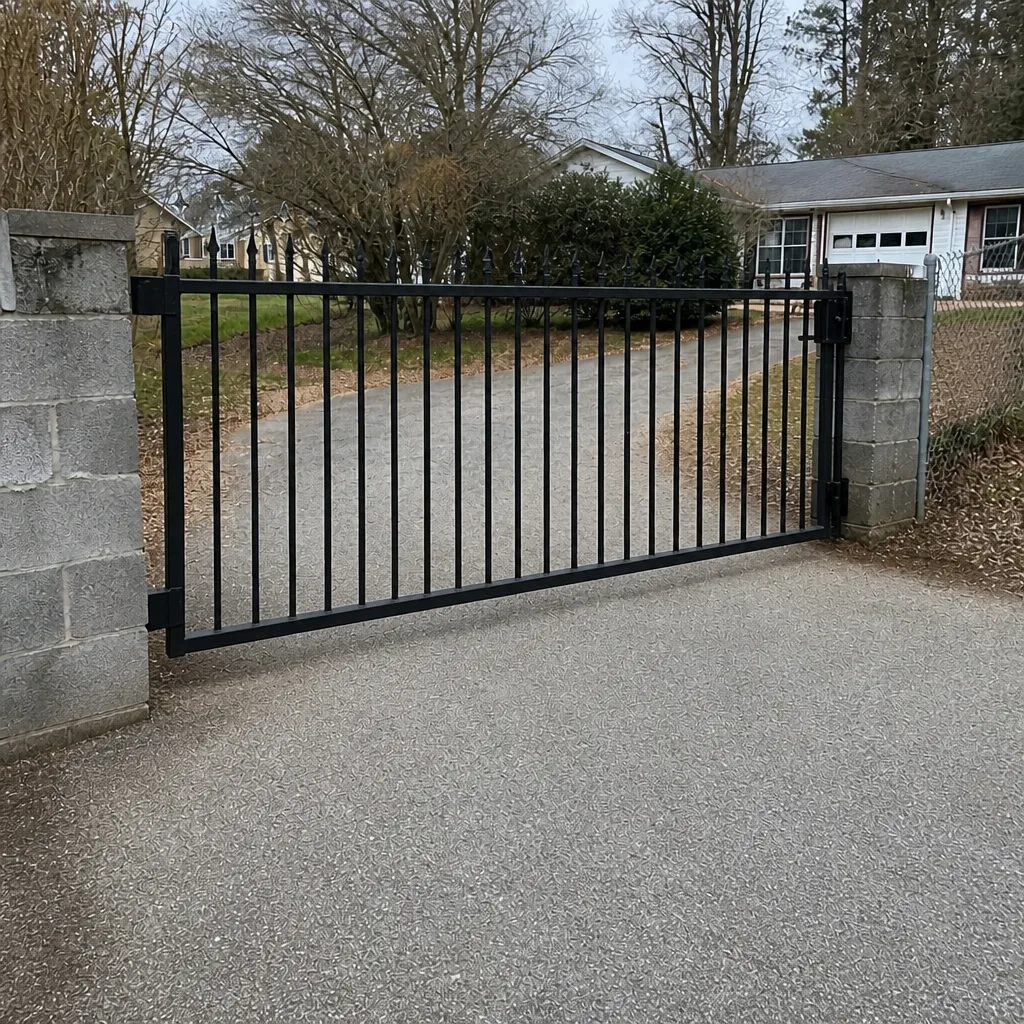
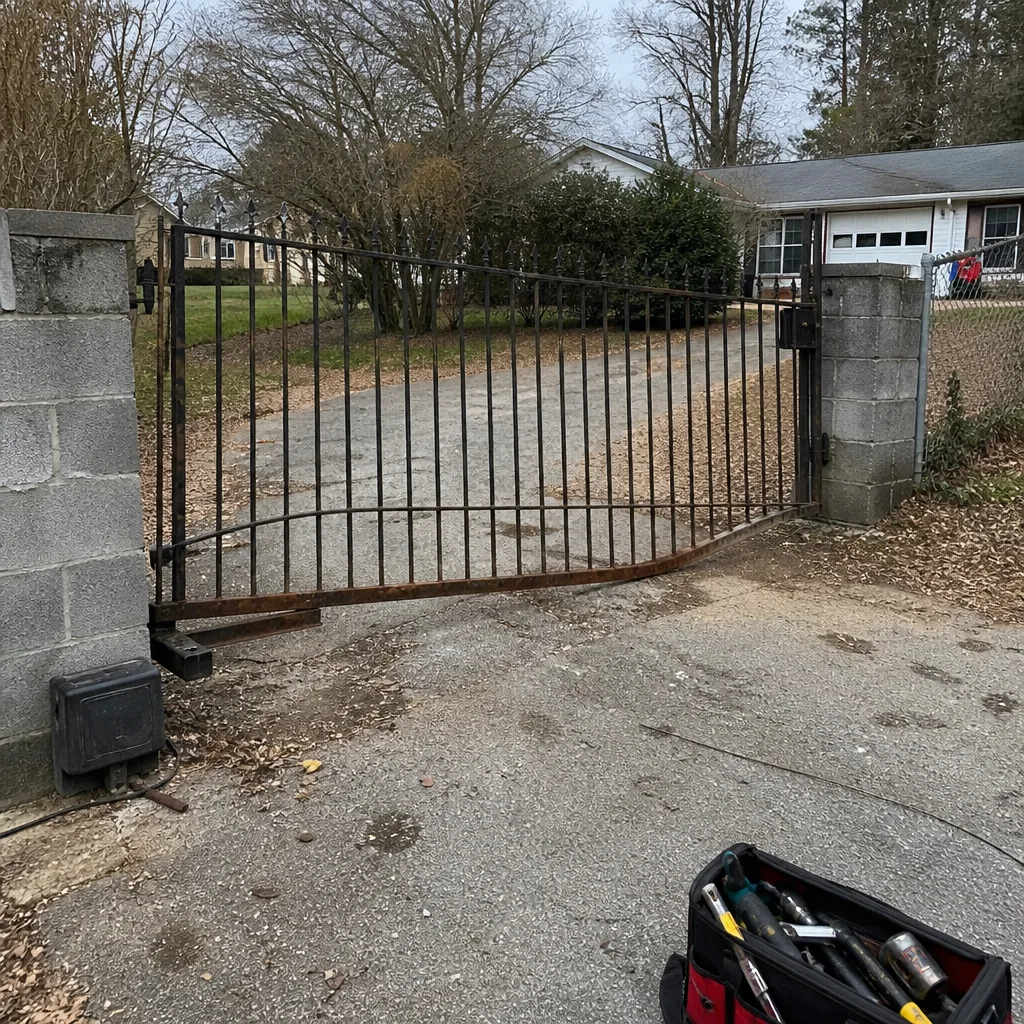 Before
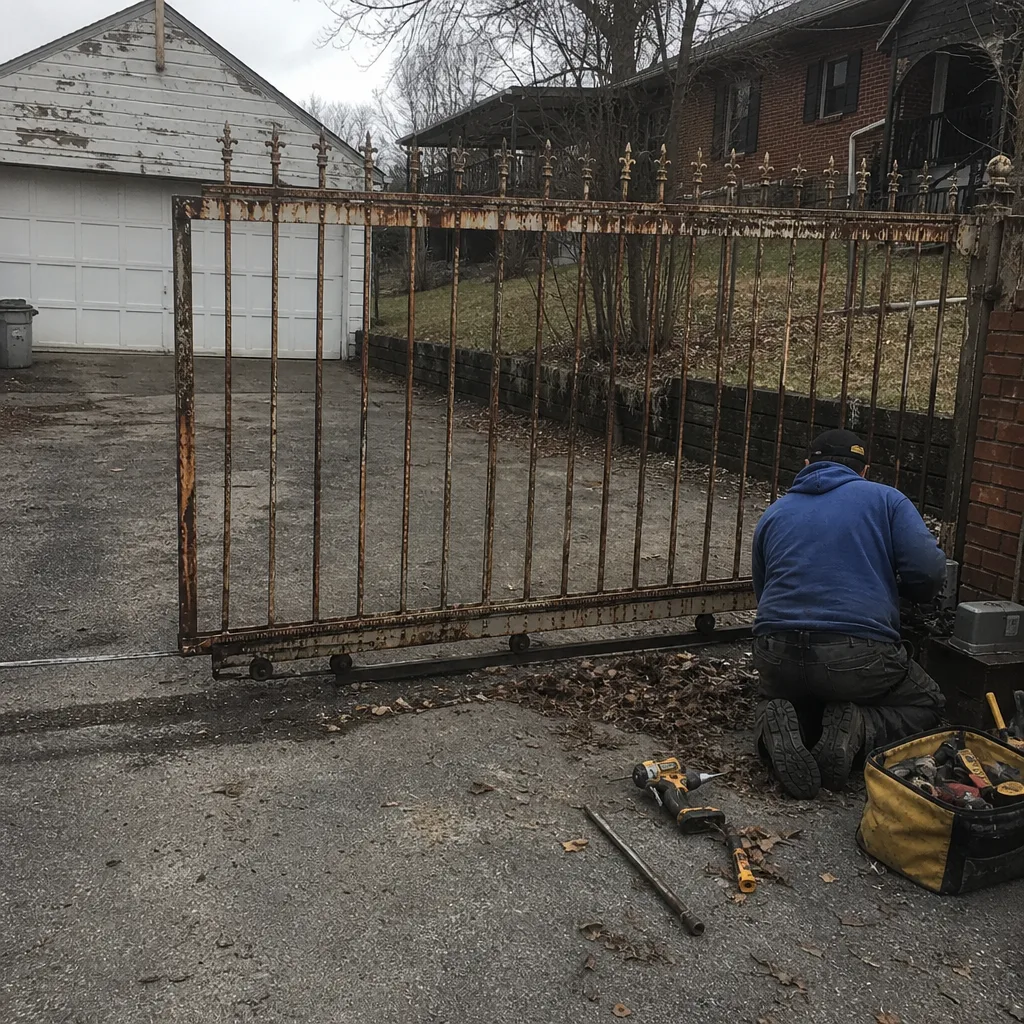
 After
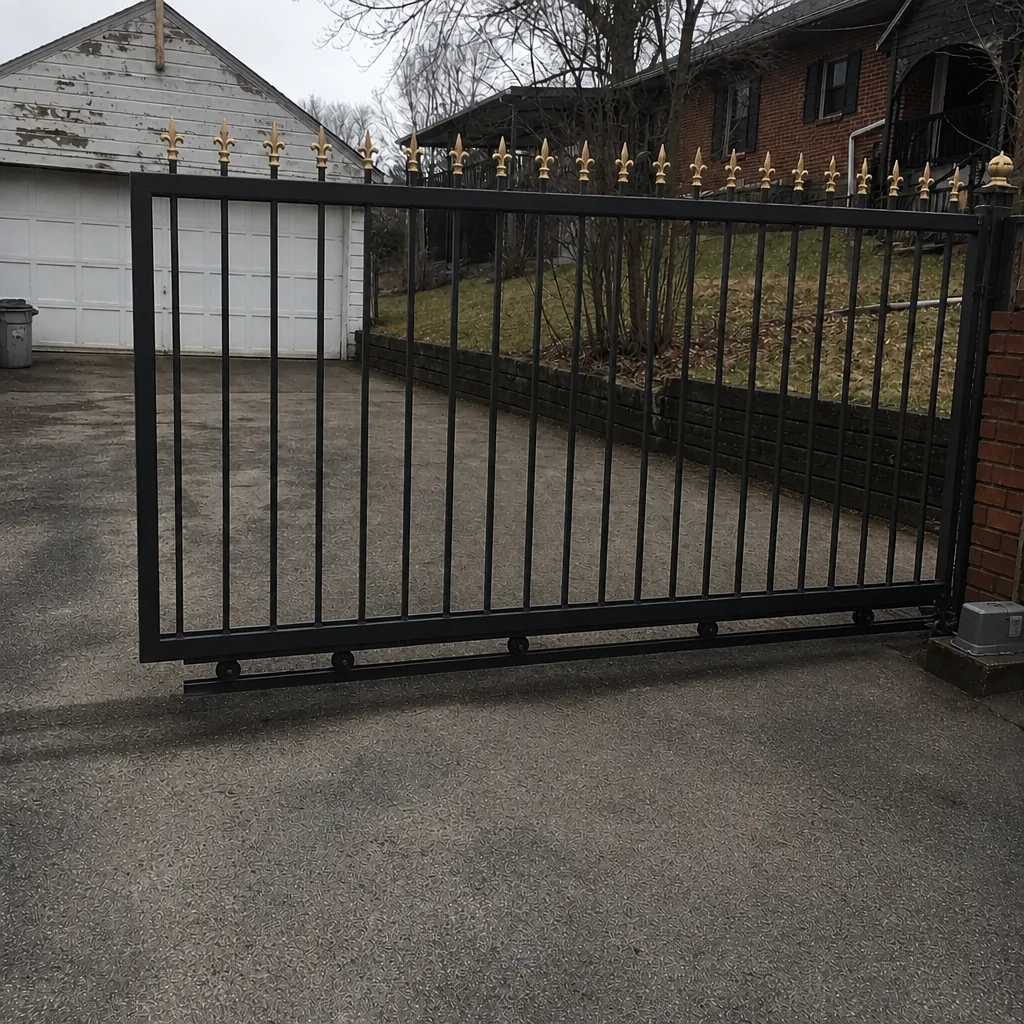
 Before
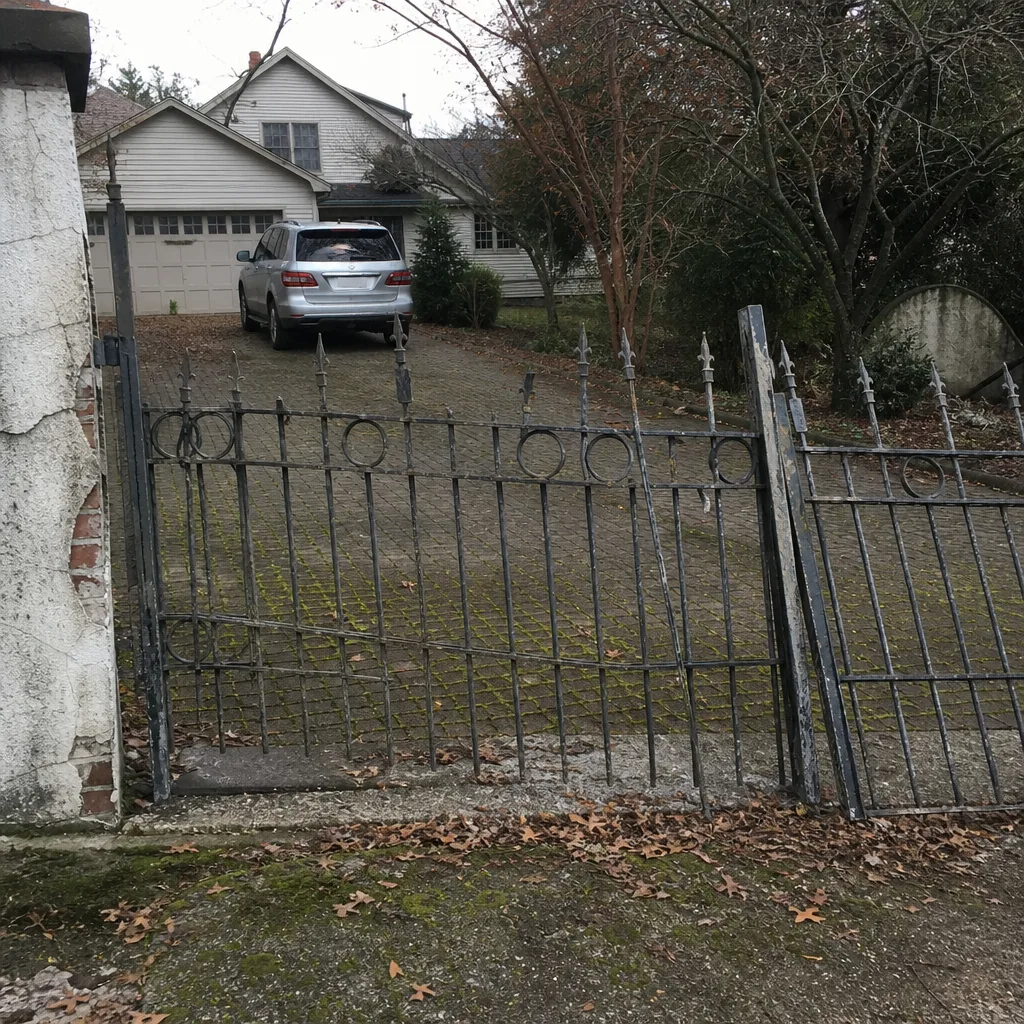
 After
 Before
 After
When to Call a Professional
Some symptoms are straightforward to check and some need a trained eye. Call a professional if your gate hesitates or stalls, makes grinding or humming noises, reverses without an obstruction, or responds only sometimes to the remote. Call immediately if a gate is stuck open (a security gap) or stuck closed (an access emergency), if the gate has come off its track, or if you see damaged wiring, a scorched control board, or any sign of electrical trouble. Never open an operator enclosure or touch live wiring yourself; that work belongs to a trained technician. Gate Repair Knoxville offers free estimates in Knoxville. Call (866) 361-6964. We answer 24/7. Fast dispatch from 7am to 7pm, Sunday through Friday.
Frequently Asked Questions
The most common warning signs are a gate that hesitates before moving, grinding or humming noises, inconsistent remote response, partial travel, and reversal mid-cycle. Rust at joints, sagging hinges, and worn rollers are the usual visual clues. Any of these recurring is worth a diagnosis. Call (866) 361-6964 for a free estimate.
Often, yes. A gate that pauses before opening is usually compensating for low voltage, which points to battery or connection trouble. Left alone, the fault tends to spread to the control board or motor. Get it checked early with electric gate repair before the delay turns into a gate that won’t move. Call (866) 361-6964.
Intermittent failures are usually marginal electrical faults, and they’re the hardest to trace once they spread. A consistent fault shows up on every test, so it’s easier to find. Random failures get more expensive to diagnose the longer they’re left. Call (866) 361-6964 for a free estimate on the diagnosis.
You can safely check the outside for obstructions, debris, and visible wear, but your gate’s operator wiring and control board are electrical work that a trained technician should handle. Grinding and humming can point to a mechanical or electrical fault, and testing the wrong component can cause more damage. Call (866) 361-6964 for a free estimate.
Yes. We work on LiftMaster, FAAC, BFT, Linear, Viking, Ghost Controls, DoorKing, Elite, and Mighty Mule, across both residential and commercial systems. A photo of the operator label helps us identify your model quickly. Call (866) 361-6964 for a free estimate.
Repair is usually the right choice when the fault is a component like a limit switch, capacitor, or connection and the gate structure is sound. Replacement makes sense when the gate’s frame or hardware is compromised, or repairs pile up on an exhausted system. A brand-agnostic diagnosis will tell you which applies. Call (866) 361-6964.
The Bottom Line
Gate failure usually comes with warnings, not silence. A hesitation, a grind, a random response to the remote, a rust streak at a hinge, a worn roller: each one points to a specific part, and each one is easier to fix while it’s small. The most urgent problems are the intermittent ones, because they’re the hardest to trace later. Run the ten-minute self-test, note what you find, and get ahead of the repair. Our technicians have up to 9 years of experience across both residential and commercial gate systems, and we’re glad to help you understand what your gate is telling you before it stops completely. For Gate Repair Knoxville, call (866) 361-6964 for a free estimate. We answer 24/7. Fast dispatch from 7am to 7pm, Sunday through Friday. For more on how to choose a service you can rely on in Knoxville, we’re happy to talk it through.
Written by the team at Gate Repair Knoxville.